
Federal Policy, Taxes & The Fight For Control: Cannabis Industry Is Growing Up Fast
The cannabis industry spent decades fighting for legitimacy. Now it must learn to operate inside legitimacy.

For decades, the cannabis industry fought one battle:
Legalization.
Today, it faces a much harder one:
Institutionalization.
The latest developments in the cannabis space paint a picture of an industry entering a new phase—one where the biggest threats and opportunities are no longer coming from activists or ballot initiatives, but from:
Federal regulators
State attorneys general
Tax authorities
Healthcare systems
Administrative judges
Governors
Compliance departments
The cannabis conversation has evolved from:
“Should marijuana be legal?”
to:
“How should a trillion-dollar cannabis economy actually function?”
That shift changes everything.
Because when an industry becomes mainstream, the rules become more important than the rhetoric.
This week’s stories show Washington, state governments, and regulators beginning to build the framework that could define cannabis for the next generation.
Republican Attorneys General Launch Legal Attack On Federal Rescheduling
The most consequential cannabis story of the week may not involve Congress at all.
Three Republican attorneys general have filed a lawsuit challenging the Trump Administration’s decision to move marijuana toward Schedule III.
For years, cannabis reform opponents relied on:
public safety arguments,
anti-drug messaging,
and cultural opposition.
Now they’re fighting through administrative law.
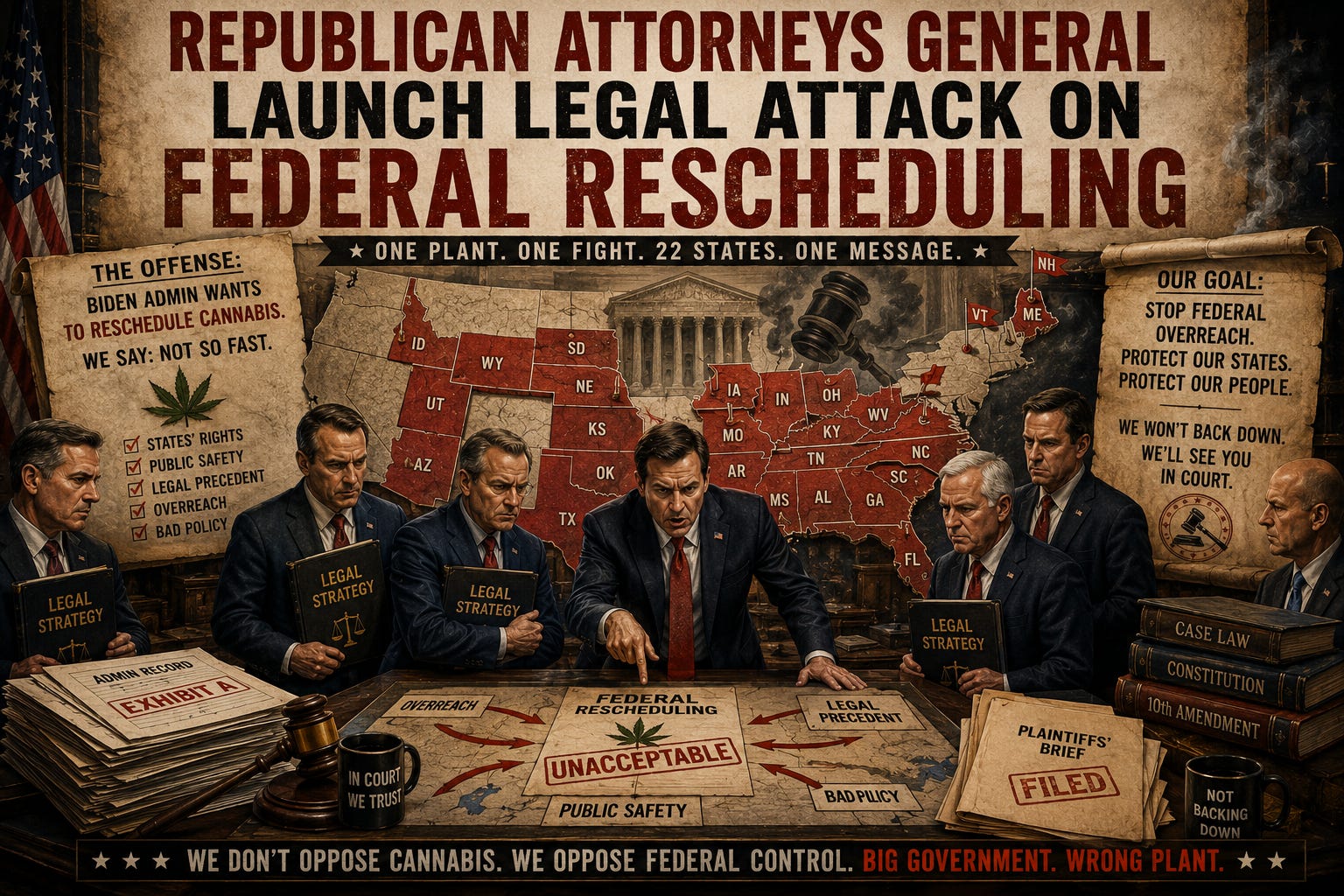
That matters because administrative law often determines how industries actually operate.
The lawsuit centers on whether federal agencies exceeded their authority during the rescheduling process.
Regardless of outcome, the case confirms something important:
Cannabis reform has become significant enough to trigger major legal challenges from state governments.
This isn’t symbolic opposition.
This is institutional opposition.
And institutional opposition tends to be more dangerous because it operates through courts, procedures, and regulatory systems.
The industry should pay close attention.
The next major cannabis battles may happen in courtrooms rather than legislatures.
🎯 Takeaway:
Cannabis reform has officially entered the litigation era.
DEA Rescheduling Hearings Are Becoming The Main Event
Cannabis advocacy groups, prohibition organizations, healthcare professionals, and industry stakeholders are preparing for upcoming DEA hearings related to marijuana rescheduling.
For operators, this may be the single most important federal process currently underway.
Why?
Because the hearing isn’t about whether people like cannabis.
It’s about how the federal government will regulate cannabis.
The outcome could impact:
banking access
tax treatment
medical research
physician involvement
compliance requirements
interstate commerce
For years, cannabis operated inside a patchwork system where states made the rules.
Now Washington is being forced to create federal guidance.
That transition creates winners and losers.
Companies that built businesses under state frameworks may need to adapt quickly to federal expectations.
🎯 Takeaway:
The future cannabis economy is increasingly being shaped by administrative agencies rather than politicians.
Cannabis Businesses Continue Waiting For IRS Guidance
If you ask most operators what matters most after rescheduling, many won’t say legalization.
They’ll say taxes.
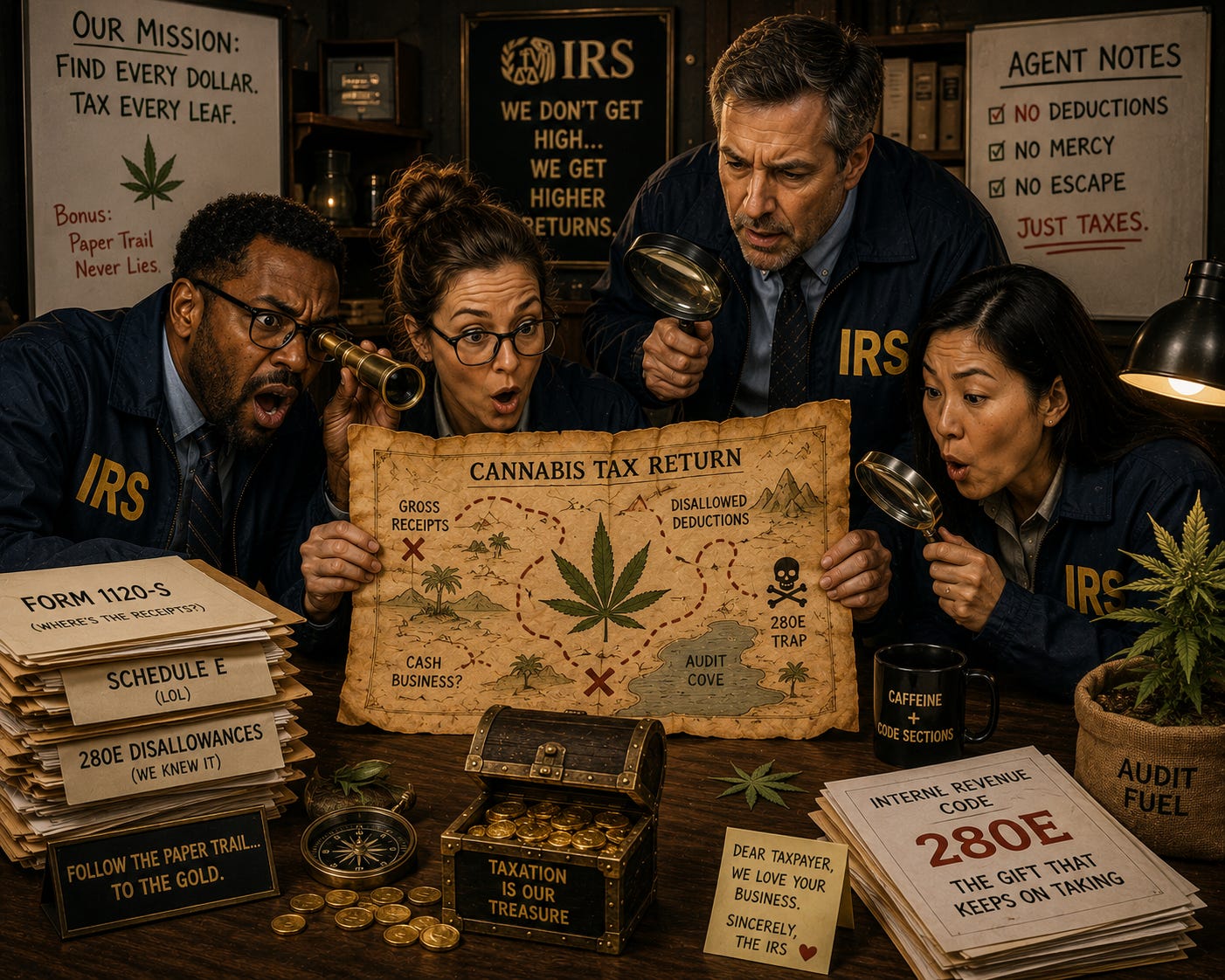
The cannabis industry has spent years dealing with Internal Revenue Code Section 280E, which prevents businesses trafficking Schedule I substances from deducting ordinary operating expenses.
The result?
Many operators pay effective tax rates that would be devastating in almost any other industry.
Now lawmakers and industry groups are pushing the IRS for clarity regarding how rescheduling could affect cannabis taxation.
For operators struggling with:
shrinking margins,
oversupply,
debt,
and price compression,
tax relief may ultimately matter more than any political headline.
Many cannabis businesses don’t need another press conference.
They need profitability.
🎯 Takeaway:
IRS guidance could become one of the most financially significant cannabis developments of the decade.
Americans Have Already Moved On From The Legalization Debate
New polling continues to show overwhelming support for marijuana legalization across the United States.
At this point, legalization itself is no longer the primary debate.
Most Americans have already made up their minds.
The new debate centers on:
regulations
public safety
taxation
labor standards
healthcare integration
market structure
Cannabis has crossed the threshold from controversial issue to mainstream issue.
And once that happens, politics tends to shift from ideology toward administration.
The public increasingly assumes cannabis is here to stay.
The challenge now is determining how the system evolves around it.
🎯 Takeaway:
The legalization argument is largely over. The governance argument is just beginning.

Virginia’s Cannabis Market Remains Stuck In Limbo
Virginia remains one of the most fascinating cannabis stories in America.
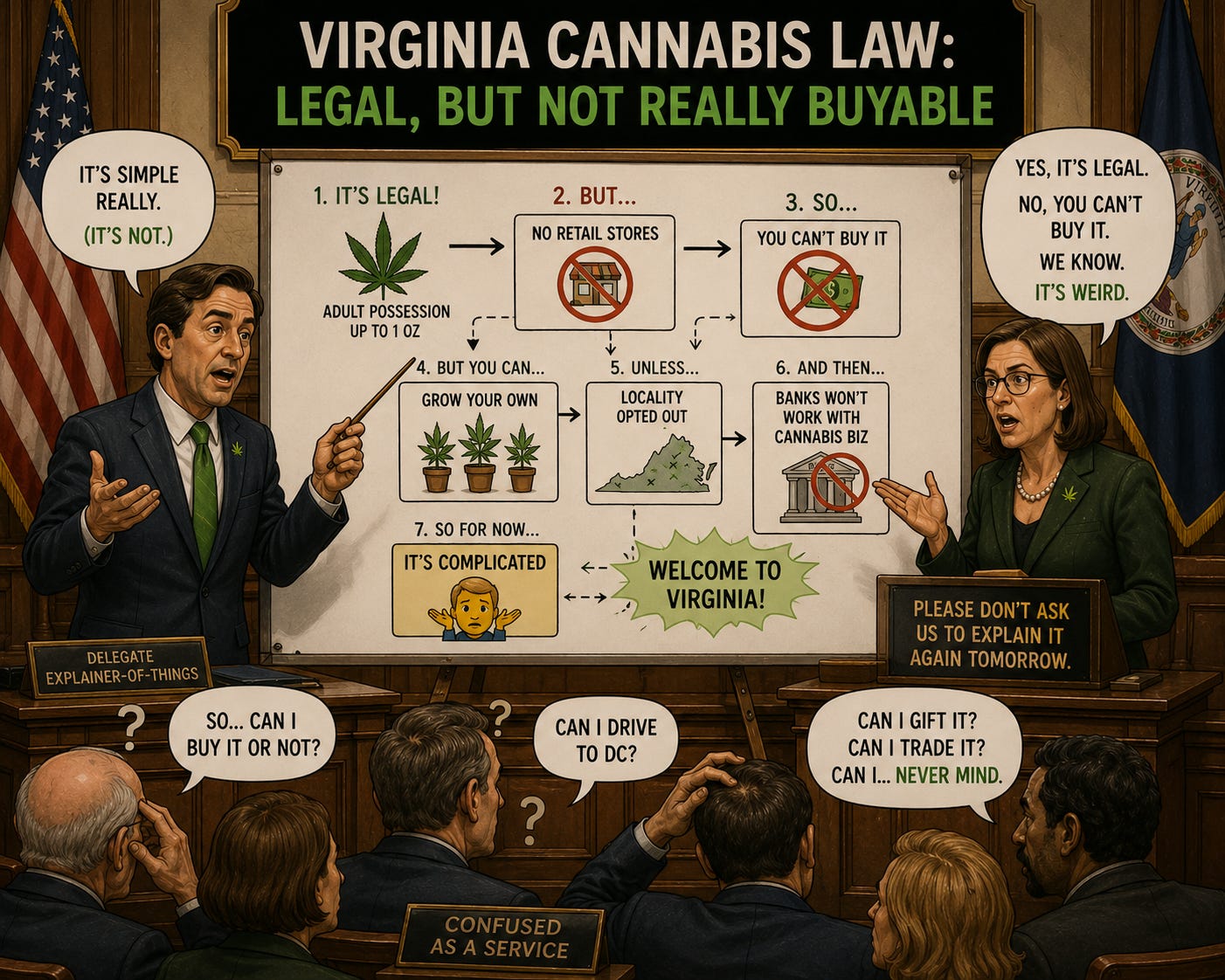
Possession is legal.
Home cultivation is legal.
Public acceptance is high.
Yet retail sales remain stalled.
Following Governor Abigail Spanberger’s veto, lawmakers continue exploring ways to revive commercial cannabis sales.
This highlights a growing reality in cannabis policy:
Legalization is easy compared to implementation.
Building a functioning cannabis market requires:
licensing systems
enforcement structures
taxation models
compliance programs
social equity frameworks
Virginia’s struggle is increasingly becoming a national case study.
🎯 Takeaway:
Cannabis legalization and cannabis commercialization are two very different things.
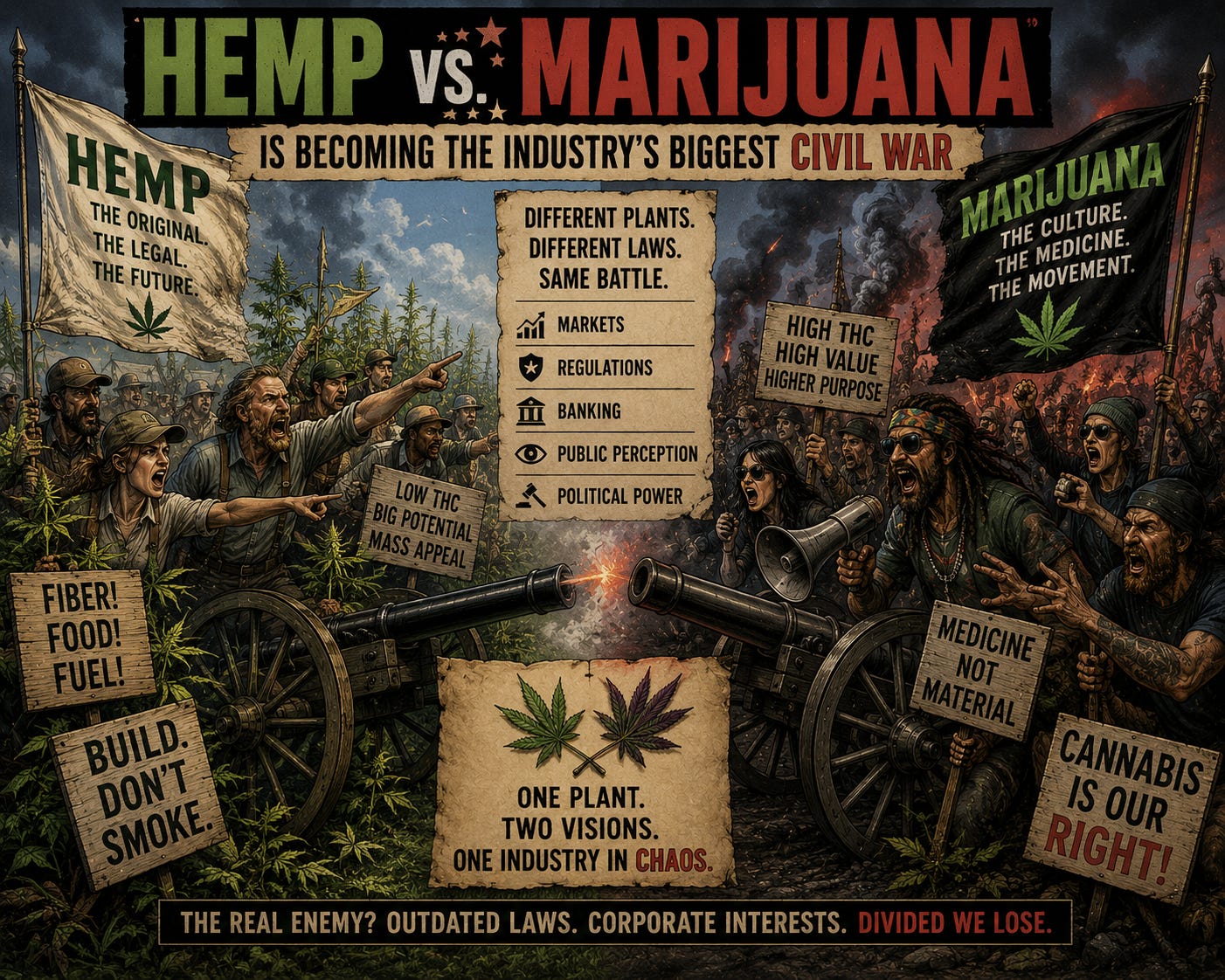
Hemp vs. Marijuana Is Becoming The Industry’s Biggest Civil War
Quietly, one of the largest battles in cannabis isn’t happening between legalization advocates and prohibitionists.
It’s happening inside the industry itself.
The hemp-derived cannabinoid market continues expanding rapidly through products containing:
Delta-8 THC
THCA
hemp beverages
alternative cannabinoids
Licensed marijuana operators argue hemp businesses avoid:
taxes,
licensing costs,
and regulatory burdens.
Hemp operators argue they’re delivering innovation and consumer choice.
The fight is intensifying.
And eventually Congress will likely be forced to choose a direction.
🎯 Takeaway:
The future of cannabinoids may be decided by hemp regulation rather than marijuana legalization.
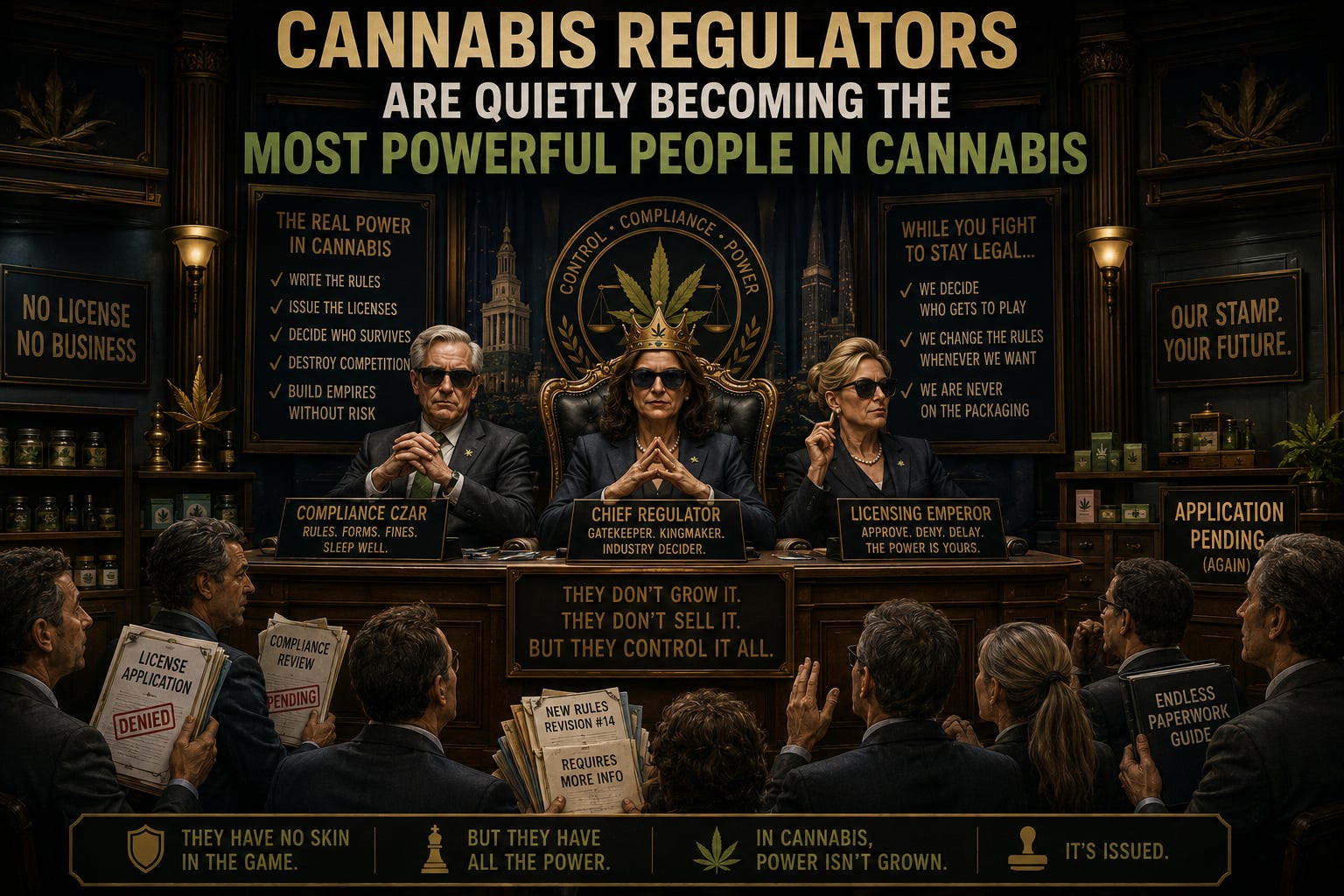
Regulators Are Quietly Becoming The Most Powerful People In Cannabis
One underappreciated trend continues accelerating nationwide:
Cannabis is becoming regulator-driven.
Whether it’s Rhode Island appointing new commission leadership or states updating licensing rules, regulators increasingly determine:
who gets licensed
who stays licensed
product standards
enforcement priorities
market growth
Most operators focus on lawmakers.
Increasingly, they should focus on regulators.
Because regulators often write the rules that businesses must actually follow.
🎯 Takeaway:
Cannabis is evolving into a compliance industry.
The Industry Is Entering The “Federal Reality” Phase
The biggest story isn’t a lawsuit.
It isn’t a hearing.
It isn’t a poll.
It’s the combination of all of them.
Cannabis is entering what might be called the Federal Reality Phase.
For years, the industry operated in a largely state-driven environment.
Now federal institutions are becoming involved simultaneously:
DEA
IRS
courts
healthcare systems
governors
state regulators
That’s what mature industries look like.
The next generation of winners won’t necessarily be:
the loudest,
the fastest growing,
or the most recognizable.
They’ll likely be:
well-capitalized,
operationally disciplined,
politically aware,
and compliance-focused.
🎯 Takeaway:
The cannabis industry is transitioning from a movement into a regulated economic sector.
Closing Thoughts
The cannabis industry spent decades fighting for legitimacy.
Now it must learn to operate inside legitimacy.
That means:
regulations,
audits,
tax policy,
federal oversight,
healthcare standards,
and administrative law.
The activist era built the movement.
The compliance era will determine who survives it.
And judging by the developments this week, that era has officially begun.