
Legal, Covered & still Illegal? Cannabis Policy Has Entered Its “Healthcare vs Control” Era
Cannabis is moving into healthcare, insurance & new markets; just as regulators start pulling parts of it back.

Today’s latest developments reveal a sharp pivot:
Cannabis is no longer just a legal issue—it’s becoming a healthcare system issue.
At the exact same time:
Hospitals are preparing to allow cannabis use
Federal programs are covering hemp-derived products
States are cracking down on unregulated THC markets
Lawmakers are pushing federal legalization forward
This is the new phase:
integration vs restriction—happening simultaneously.
Louisiana Moves To Allow Medical Marijuana Inside Hospitals
A major shift in cannabis healthcare access is unfolding in Louisiana—quietly, but significantly.
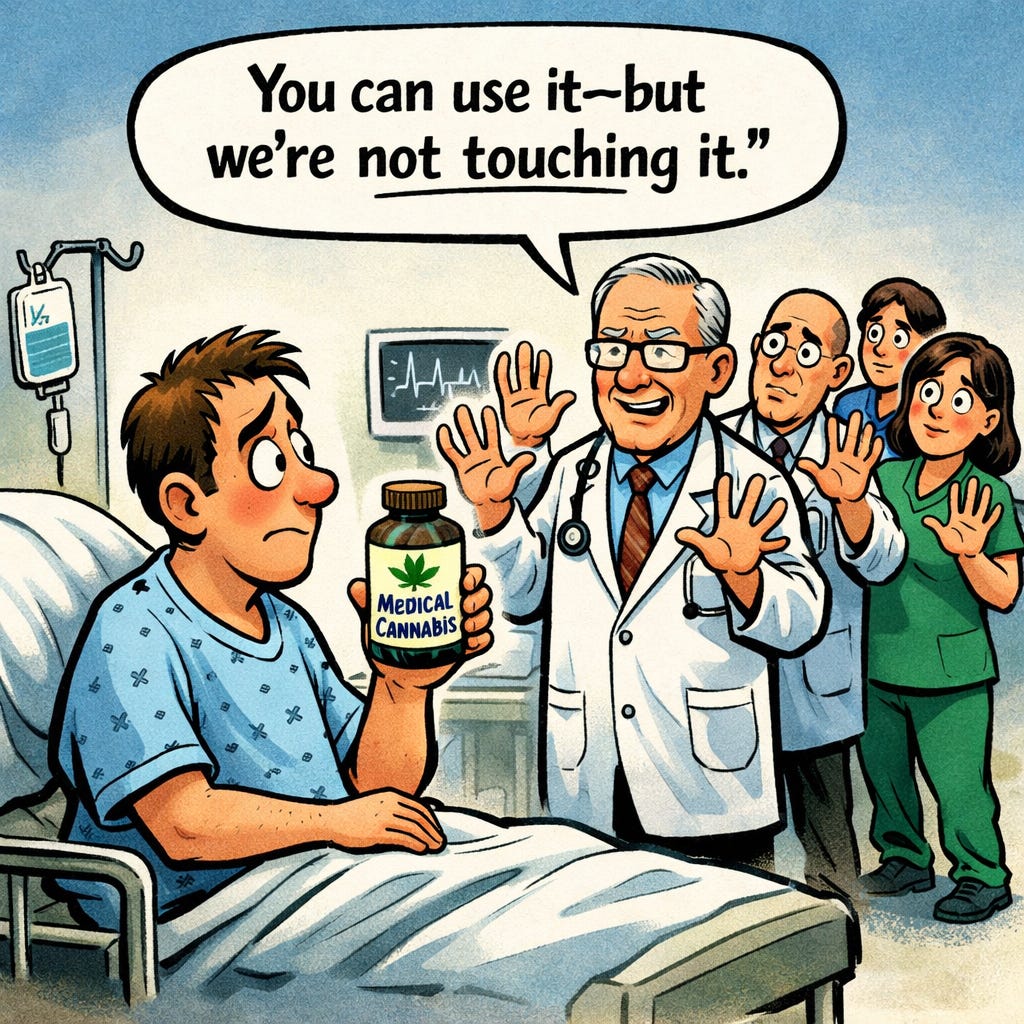
State senators have advanced a bill that would allow terminally ill patients to use medical marijuana inside hospitals, something that has historically been prohibited even in legal states.
This addresses a long-standing contradiction.
Patients who legally rely on cannabis often lose access the moment they enter clinical care—especially in hospitals governed by federal funding rules.
This bill attempts to close that gap.
But the details matter:
Patients must bring and administer their own cannabis
Hospitals cannot handle or dispense it
Products cannot be smoked or vaped
Facilities can opt out entirely if federal pressure arises
In other words, access is allowed—but carefully contained.
Still, the symbolic shift is powerful.
Cannabis is being recognized not as an external alternative, but as part of end-of-life care and patient autonomy.
That’s a major milestone.
And like similar laws in Colorado and other states, it suggests healthcare integration is accelerating—even without federal legalization.
Key Takeaways
Louisiana advances bill allowing cannabis use in hospitals.
Patients retain responsibility—hospitals remain hands-off.
Signals growing normalization of cannabis in medical settings.
Federal Government Finalizes Rule Allowing Hemp Products Under Medicare
The federal government just made one of its most consequential cannabis-adjacent moves yet.
Officials finalized a rule allowing certain hemp-derived products to be covered under Medicare Advantage plans—specifically for chronically ill patients.
This is not full cannabis legalization.
But it’s something arguably more impactful: federal healthcare integration.
The rule clarifies that products legal under both state and federal law can qualify for reimbursement as supplemental benefits.
That opens the door to:
CBD-based therapies
Certain low-THC formulations
Structured, physician-linked access
And critically—it introduces cannabis into insurance economics.
That changes everything.
Because once a product becomes reimbursable, it moves from fringe to systemized.
But the limitation remains clear:
Anything illegal under federal law is still excluded.
So while hemp enters the system, marijuana remains outside it.
That contradiction is now officially embedded in federal policy.
Key Takeaways
Medicare Advantage plans can now cover certain hemp products.
Marks major step toward cannabis-healthcare integration.
Federal legality still determines eligibility.
Missouri Moves To Ban Intoxicating Hemp THC Products
While federal policy opens doors, states are tightening control.
Missouri lawmakers have passed a bill that would ban intoxicating hemp-derived THC products, sending it to the governor’s desk.
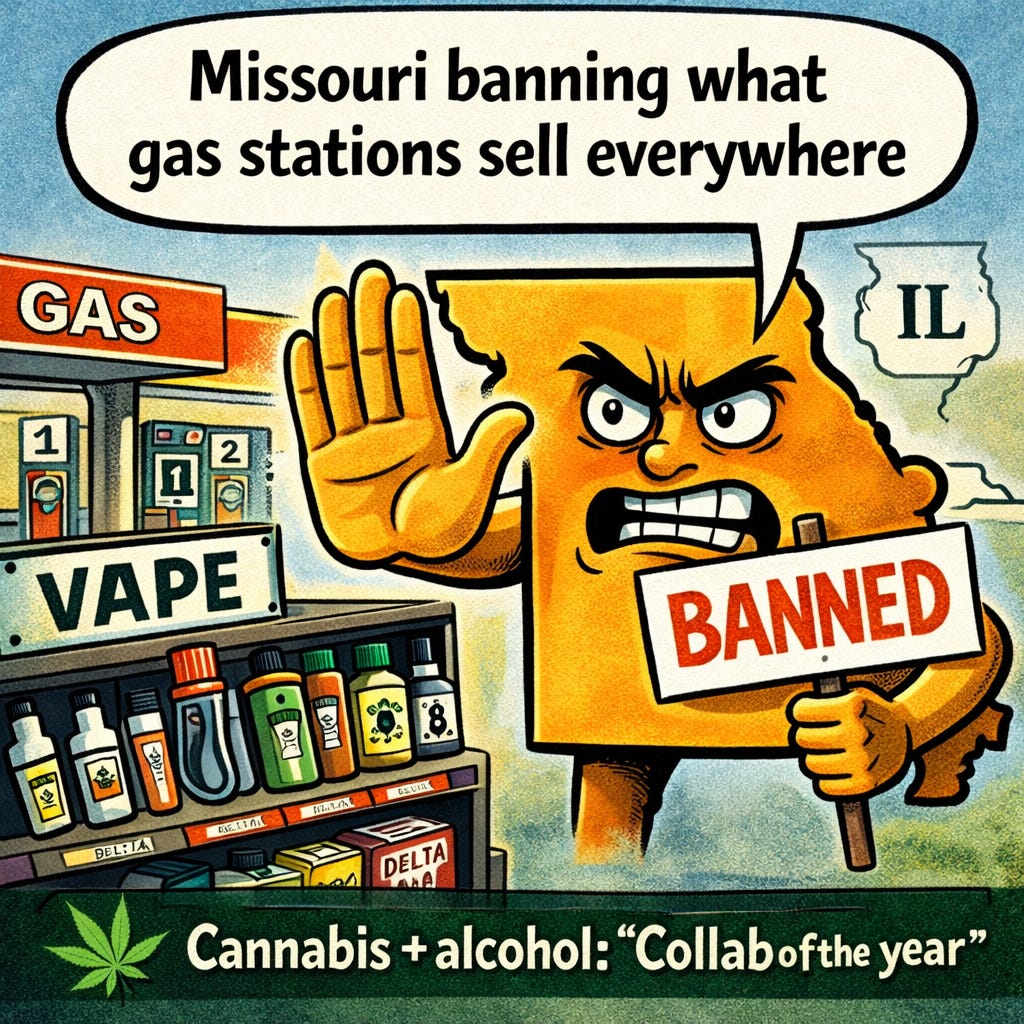
This targets a rapidly growing—and largely unregulated—market:
THC seltzers
Hemp-derived edibles
Smoke shop products outside dispensary systems
Lawmakers argue these products bypass safety regulations and licensing frameworks.
The bill would:
Remove most intoxicating hemp products from shelves
Restrict future sales to licensed marijuana dispensaries
Align state law with anticipated federal rules
This is a familiar pattern.
Legal cannabis markets are now competing with hemp-derived THC products operating outside their regulatory systems.
States are responding by closing that loophole.
But it raises a bigger question:
Is this about safety—or market protection?
Either way, the result is clear:
The “gray market” is shrinking.
Key Takeaways
Missouri moves to ban intoxicating hemp THC products.
Aims to bring THC sales under regulated cannabis systems.
Reflects growing crackdown on unregulated markets.
Trump Proposal Protects Medical Marijuana—Blocks DC Sales
Federal cannabis policy just delivered a perfect contradiction.
A new budget proposal would continue protecting state medical marijuana programs from federal interference—while simultaneously blocking Washington, D.C. from legalizing recreational cannabis sales.
This dual approach reflects the current federal mindset:
Support what already exists.
Restrict what expands further.
The medical protections come via a longstanding congressional rider preventing DOJ interference.
But the D.C. restriction shows how Congress still controls cannabis policy in specific jurisdictions.
This creates a two-tier system:
States → protected autonomy
D.C. → federal limitation
It’s a reminder that cannabis policy isn’t just about legality—it’s about who has authority.
Key Takeaways
Federal proposal protects state medical marijuana programs.
Continues to block recreational sales in Washington, D.C.
Highlights uneven federal control over cannabis policy.
Hawaii Senators Push Congress To Legalize Marijuana Nationwide
Hawaii lawmakers are turning up the pressure on Washington.
State senators approved resolutions urging Congress to federally legalize marijuana, expand banking access and clear past convictions.
The reasoning is practical—not ideological.
Federal prohibition is still causing:
Banking barriers for businesses
Legal risks despite state compliance
Long-term consequences for past convictions
This is the state-level frustration that’s building nationwide.
States have legalized.
But federal law still controls key systems.
Hawaii’s move adds to a growing chorus demanding alignment.
Key Takeaways
Hawaii urges Congress to legalize marijuana federally.
Focus on banking, expungement and regulatory clarity.
Reflects growing state-level pressure.
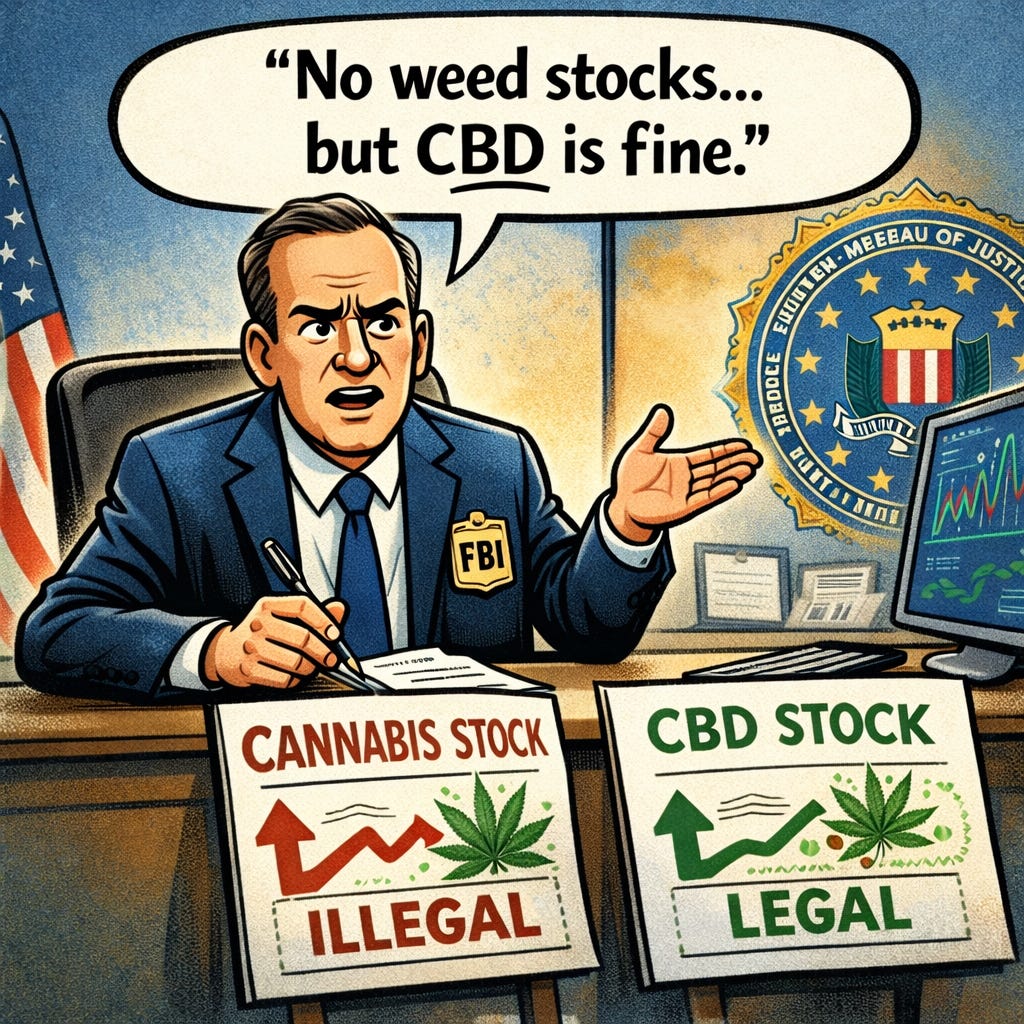
FBI Memo Reveals Strict Divide Between Hemp And Marijuana
A newly surfaced FBI memo highlights how deep the federal divide still runs.
Agents are allowed to invest in hemp and CBD companies—but are prohibited from involvement in marijuana businesses.
Even more striking:
They can’t participate in hemp companies if branding references marijuana—like a cannabis leaf.
This is where policy becomes almost surreal.
The product can be legal.
The plant can be legal.
But the image of the plant can still be restricted.
It’s a perfect example of how federal cannabis policy operates:
Technically consistent. Practically confusing.
Key Takeaways
FBI allows hemp involvement but bans marijuana ties.
Branding alone can trigger restrictions.
Highlights ongoing federal inconsistencies.
DC Proposes Cannabis + Alcohol Industry Partnership For THC Drinks
Washington, D.C. is exploring a new kind of cannabis market evolution.
A proposal would allow medical marijuana companies to partner with breweries and distilleries to produce THC-infused beverages.
The goal: combine existing infrastructure with cannabis innovation.
Key features:
Alcohol companies can produce—but not sell directly
Products sold through medical cannabis dispensaries
Strict testing and regulation required
This reflects a broader trend:
Cannabis is no longer isolated—it’s merging with other industries.
Food, beverage, wellness and pharmaceuticals are all becoming part of the ecosystem.

Key Takeaways
D.C. proposes partnerships between cannabis and alcohol industries.
Focus on THC-infused beverages for medical market.
Signals cross-industry cannabis expansion.
Attorney General Shift Could Reshape Cannabis Rescheduling
The future of federal cannabis reform may depend on leadership changes.
With a potential new attorney general under consideration, experts say the marijuana rescheduling process could be significantly impacted.
That’s because DOJ leadership influences:
DEA coordination
Policy timelines
Enforcement priorities
In cannabis policy, personnel is policy.
And right now, that policy is still unresolved.
Key Takeaways
DOJ leadership change could impact cannabis rescheduling.
Federal reform remains politically driven.
Timeline still uncertain.
Cannabis Is Being Absorbed (Carefully)
Today’s stories point to a clear direction:
Cannabis isn’t being legalized all at once.
It’s being absorbed piece by piece:
Into healthcare
Into regulated markets
Into federal frameworks
But always with limits.
Always with conditions.
This isn’t full acceptance.
It’s controlled integration.
And that may define the next decade of cannabis policy.