
The Bottleneck Is Now the Story

For years, cannabis reform was about momentum.
Now, it’s about friction.
Across the latest developments, one pattern is unmistakable:
States are expanding access
Consumers are normalizing use
Science is accelerating
But federal alignment—and regulatory clarity—remain stuck
And that tension is no longer background noise.
It’s the defining force shaping the industry right now.
Today’s eight stories show a system moving forward—
while key decision-makers hesitate, stall or quietly conflict behind the scenes.
Trump Advisor: “Someone Is Holding Up” Rescheduling
One of the most revealing statements in recent months didn’t come from an agency—it came from inside the administration.
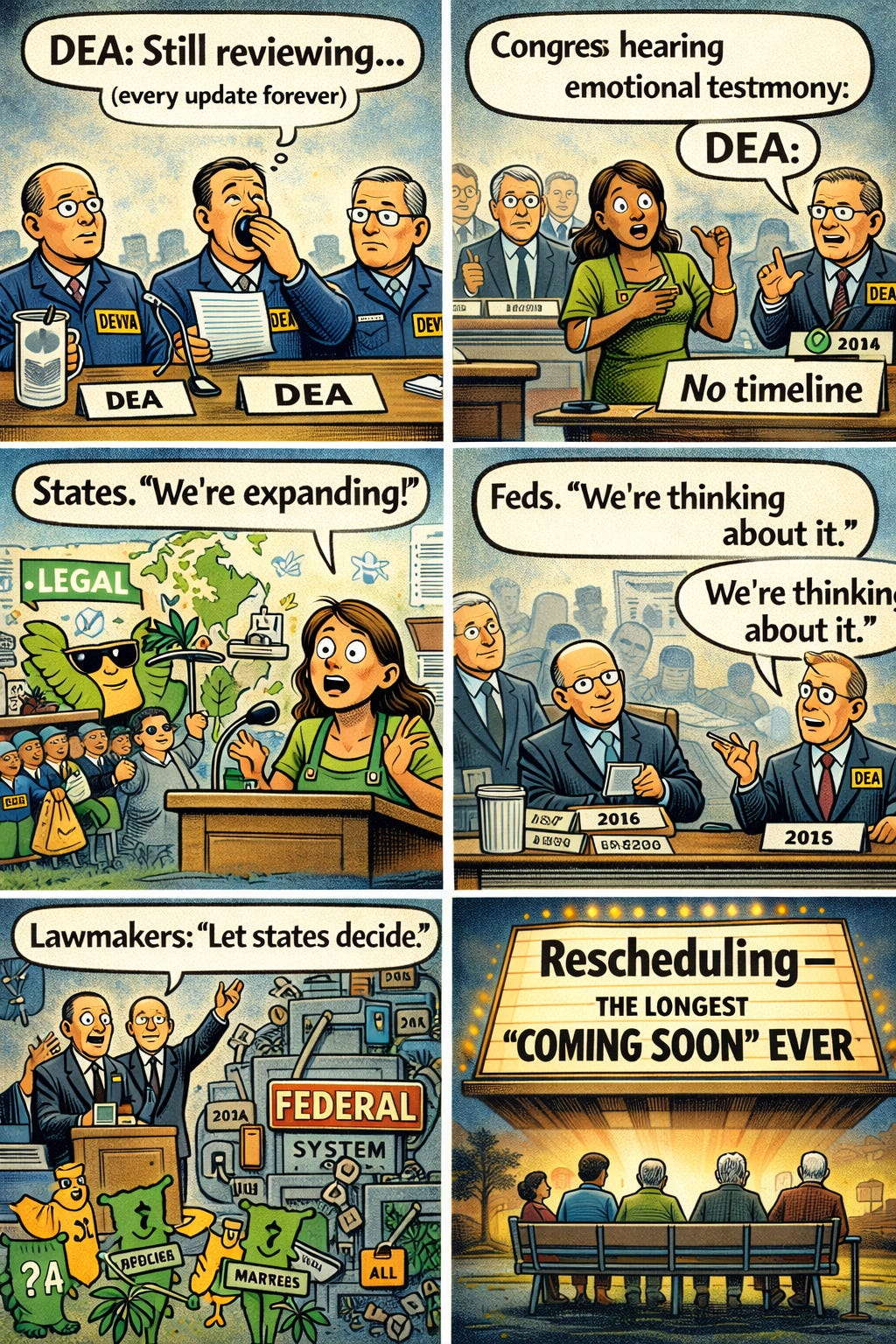
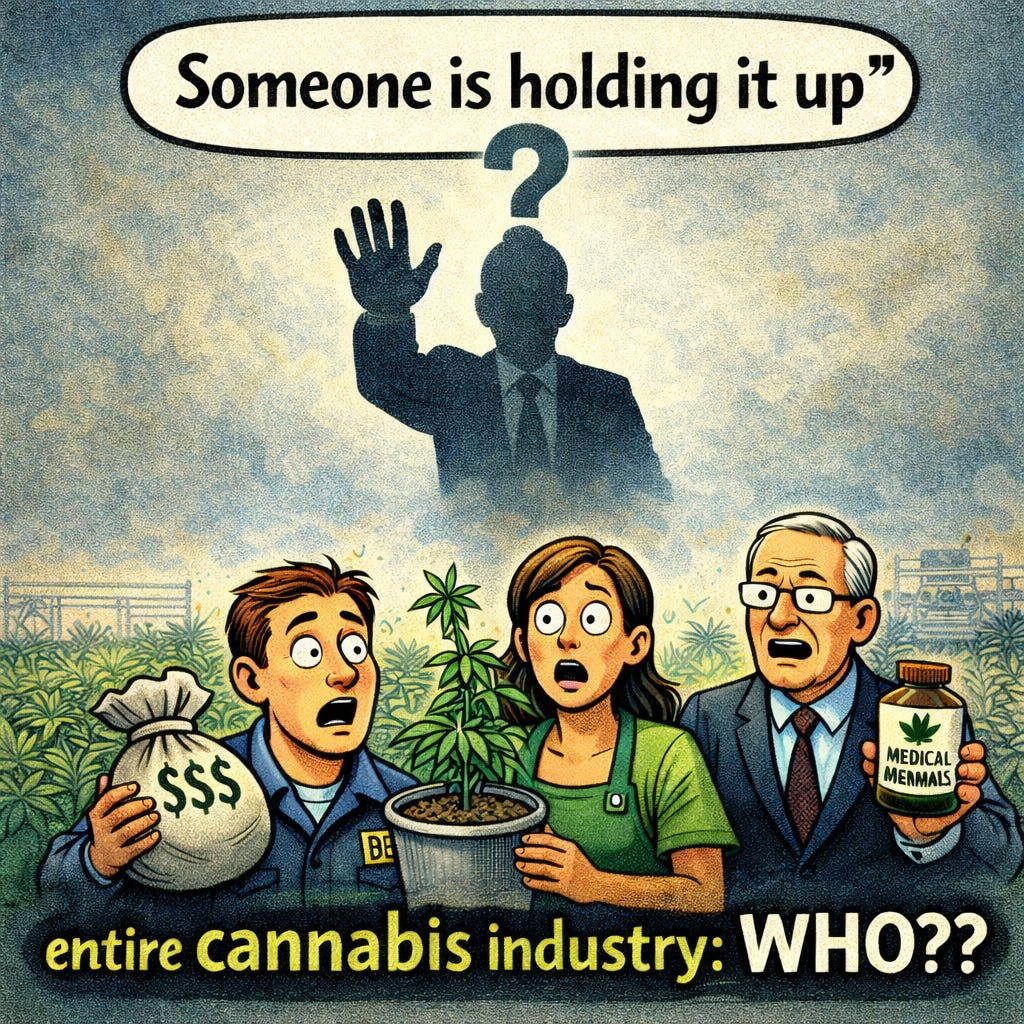
A longtime Trump advisor says someone internally is actively “holding up” the cannabis rescheduling process, despite direct orders to complete it.
This is a major signal.
Because it confirms what many suspected but couldn’t prove:
The delay isn’t just procedural—it may be political or bureaucratic resistance.
And it reframes the entire federal situation.
Until now, the narrative was:
“The process takes time”
Now, it’s:
“The process may be intentionally slowed”
That distinction matters.
It suggests:
Internal disagreement within the administration
Competing priorities or risk calculations
Potential election-timing considerations
Meanwhile, the consequences continue to ripple:
Research remains restricted
Banking limitations persist
State–federal contradictions deepen
Even more striking is the urgency behind the statement:
The advisor emphasized it’s “vitally important” to complete rescheduling before the next election.
That introduces a new layer:
Cannabis reform is now explicitly tied to political timing.
And that means outcomes may depend less on science—and more on strategy.
Takeaway: Federal cannabis reform may be stalled not by process—but by internal conflict.
Americans want Home Grow—And they Don’t Trust Products
A new national poll delivers a powerful—and slightly uncomfortable—message for the industry:
Consumers want control.
61% of Americans support legalizing home cultivation, even as 72% say they’re concerned about pesticides in cannabis products.
That combination tells a deeper story.
This isn’t just about legalization anymore—it’s about trust.
Consumers are increasingly questioning:
Product safety
Supply chain transparency
Chemical exposure
And many are arriving at a simple conclusion:
“If I grow it myself, I know what I’m getting.”
Even more interesting:
Support for home grow exceeds actual cannabis usage rates
Consumers prioritize pesticide-free products—even over higher THC
That signals a shift away from potency-driven markets toward:
Quality
Transparency
Wellness alignment
It also creates tension for regulators and businesses.
Because home cultivation:
Reduces reliance on retail systems
Challenges taxation frameworks
Complicates enforcement
But resisting it may be politically difficult when public support is this strong.
Takeaway: The next cannabis battle isn’t legalization—it’s consumer trust and product integrity.
Oregon expands Medical Cannabis into End-of-Life Care
Oregon just took a quiet—but profound—step forward.
The state will now allow medical cannabis use in hospices and certain care facilities, expanding access for patients with serious conditions.
This is more than policy—it’s a philosophical shift.
Cannabis is being positioned not as an alternative therapy—but as a standard component of compassionate care.
Supporters framed it clearly:
Traditional treatments like opioids can reduce consciousness and quality of interaction in final days.
Cannabis offers something different:
Pain relief
Presence
Dignity
And that framing matters.
Because it moves cannabis deeper into healthcare systems—not just as an option, but as a quality-of-life tool.
The bill also protects:
Healthcare providers discussing cannabis
Facilities allowing its use
That’s critical.
Because one of the biggest barriers has been institutional hesitation—not legality.
Now, that barrier is starting to fall.
Takeaway: Cannabis is becoming embedded in healthcare—not as an exception, but as a standard option.
Massachusetts sends Major Market Overhaul To Governor
Massachusetts is entering its next phase.
Lawmakers have approved sweeping reforms that:
Double possession limits
Restructure the Cannabis Control Commission
Adjust business rules and licensing frameworks
This is what mature markets look like.
The initial legalization phase is over.
Now comes:
Optimization
Efficiency
Governance redesign
And that’s not trivial.
Early cannabis systems were built quickly—often under political pressure.
Now states are refining them based on:
Market realities
Regulatory bottlenecks
Industry feedback
Massachusetts is essentially rebuilding parts of its system while it’s already running.
That’s complex—but necessary.
Because the long-term winners in cannabis won’t just be early adopters.
They’ll be the states that build functional, scalable systems.
Takeaway: Cannabis policy is shifting from legalization to system engineering.
Louisiana advances Hospital Access For Terminal Patients
Louisiana lawmakers have approved a bill allowing terminally ill patients to use medical cannabis in hospital settings.
This is another major healthcare integration moment.
Historically, hospitals have been one of the last barriers for cannabis access—even in legal states.
Why?
Federal funding concerns
Liability fears
Institutional conservatism
This bill begins to change that.
It recognizes a simple reality:
Patients shouldn’t lose access to medical cannabis just because they enter a hospital.
Especially at end of life.
The measure is limited—but symbolic.
Because once cannabis enters hospital environments, it:
Gains legitimacy
Expands clinical exposure
Integrates into formal care systems
And that has long-term implications for:
Research
Prescribing practices
Insurance frameworks
Takeaway: Cannabis is breaking into the most conservative part of healthcare—the hospital system.
Connecticut expands Psychedelics Access Framework
Connecticut is preparing for the next wave.
Lawmakers approved a bill to expand access to a psychedelics pilot program—anticipating future FDA approval of substances like psilocybin and MDMA.
The key detail:
The program would no longer be limited to specific groups like veterans.
Instead, it opens eligibility to a broader population.
This reflects a major lesson learned from cannabis:
Don’t wait for federal approval to start building infrastructure.
States are now:
Designing frameworks in advance
Expanding access models early
Avoiding rollout delays
Cannabis walked so psychedelics could run—more strategically.
Takeaway: Psychedelics policy is evolving faster and more intentionally because of cannabis.
Maryland moves to protect Veterinarians recommending Cannabis
Maryland is tackling a niche—but important—gap:
Veterinarians recommending medical cannabis for animals will now receive legal protections.
This highlights how far cannabis integration has come.
We’re now beyond:
Human medical use
Adult-use legalization
And into:
Veterinary care
Specialized applications
The issue until now was risk.
Veterinarians could face disciplinary action simply for discussing cannabis options.
This bill removes that fear.
And it opens the door for:
Expanded treatment options
More research into animal use
New product categories
It may seem small—but it reflects a broader trend:
Cannabis is expanding into every corner of healthcare.
Takeaway: Cannabis normalization is reaching even highly specialized medical fields.
Hawaii Moves Toward Psychedelics Task Force
Hawaii lawmakers are advancing legislation to create a psychedelics task force focused on access to therapies like psilocybin and MDMA.
This is early-stage—but strategic.
Task forces serve as:
Policy incubators
Research hubs
Framework designers
And they allow states to move forward without immediate legalization.
It’s a cautious approach—but a deliberate one.
And it mirrors the early stages of cannabis reform.
The difference?
States now have a roadmap.
Takeaway: The next drug policy wave is being built more carefully—and more intelligently—than the last.
Progress Is No Longer the Question
Here’s the reality:
Cannabis is advancing on every front:
Healthcare
Consumer behavior
State policy
Adjacent industries
But the system governing it?
Still fragmented. Still hesitant. Still unresolved.
And that creates today’s defining paradox:
Cannabis is already integrated—
but not fully accepted.
Until that gap closes,
the story won’t be about growth.
It will be about friction.