
The industry spent 20 years fighting for legalization. Now it has to survive regulation.
Courts, regulators and Congress are quietly deciding what the cannabis industry looks like for the next decade.

Cannabis Has Entered Its Litigation Era
For twenty years, cannabis reform followed a predictable script: legalization campaigns, ballot initiatives, state legislation, public opinion. Win hearts, win votes, win markets.
That script is being torn up.
The biggest cannabis stories this week aren’t about new states legalizing or new markets opening. They’re about lawsuits, administrative hearings, and regulatory disputes. The next phase of this industry is being shaped by courts and agencies as much as by elected officials — and that’s a fundamentally different game.
Cannabis is no longer fighting for legitimacy. It won that fight. Now it’s fighting over who gets to write the rules, and that fight runs through courtrooms, not ballot boxes.
Here’s what happened this week — and what I actually think it means.
The rescheduling lawsuit is a preview of the next decade.
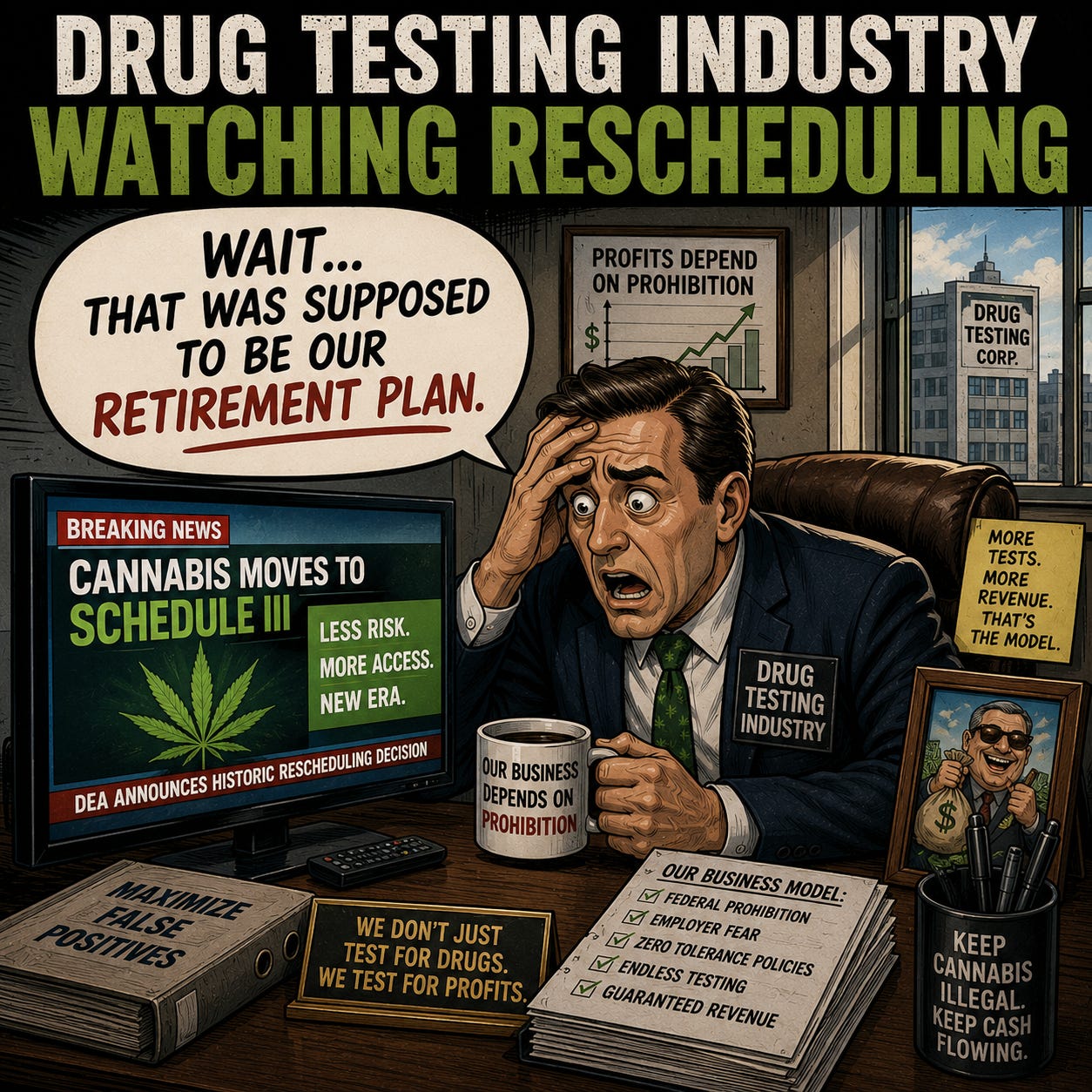
A coalition representing drug-testing interests, medical professionals, and cannabis pharmaceutical stakeholders is asking a federal court to halt the administration’s marijuana rescheduling effort.
I don’t think this lawsuit stops reform. But I think it’s one of the most important stories of the year anyway, because of what it reveals about strategy.
Look at who’s behind it: drug-testing companies, pharmaceutical interests, a handful of medical professionals. These aren’t culture warriors arguing cannabis is dangerous to society. They’re commercial interests with financial stakes in the status quo, plus some genuine procedural concerns about how rescheduling is being done. They’ve read the room — public opinion is lost to them — so they’re fighting on the one terrain where a determined minority can still win: federal administrative law.
My read: this is the template for the next decade of opposition. Expect a steady drip of procedural challenges, standing arguments, and agency-authority disputes designed not to win outright but to delay, complicate, and inject uncertainty. The goal isn’t to stop rescheduling. It’s to make the path expensive and slow.
Why it matters: The next phase of cannabis reform gets decided in courtrooms, and the opposition has already figured that out. Operators should too.
Interstate commerce is the sleeping giant nobody’s watching.
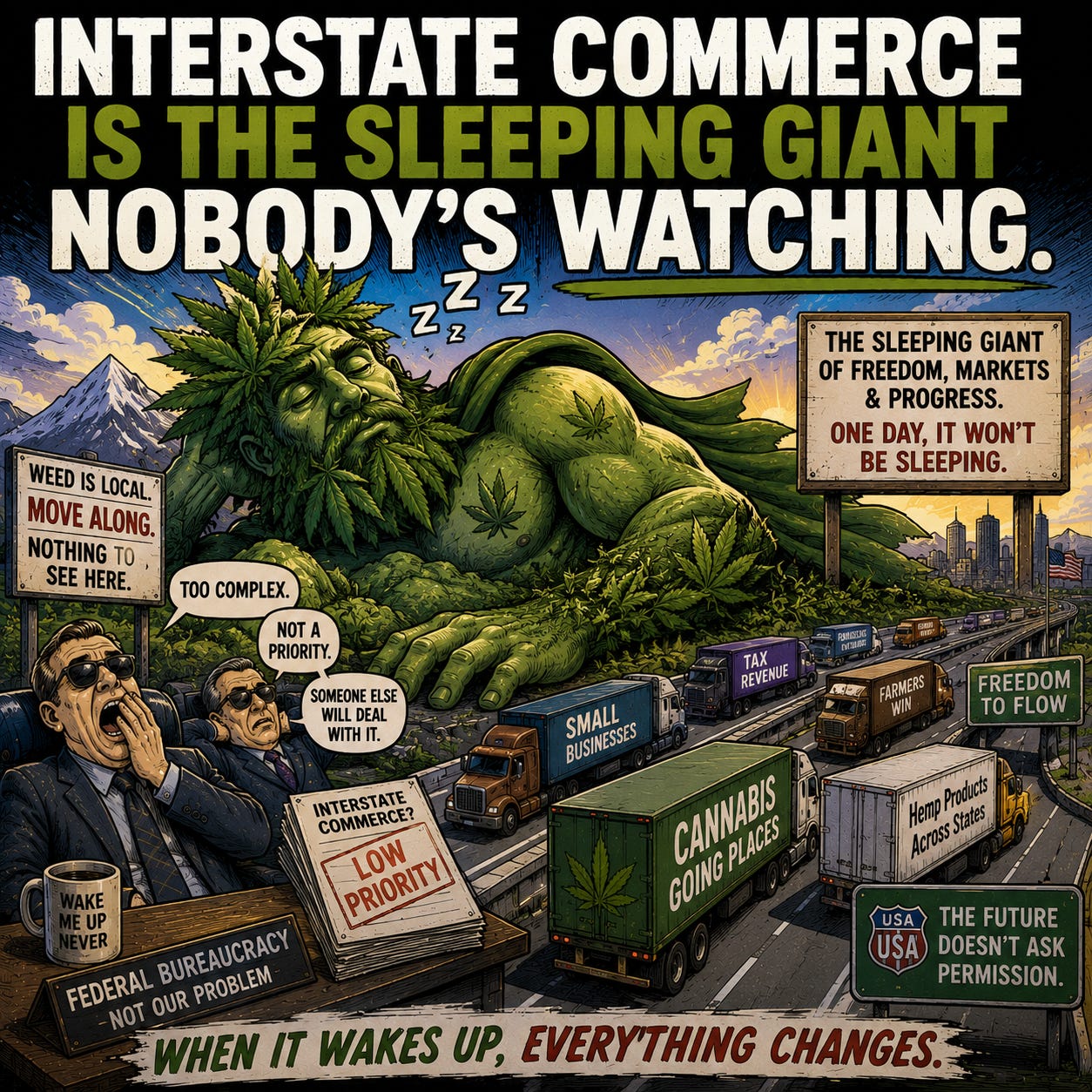
This got surprisingly little attention this week, and I think that’s a mistake. Industry advocates are arguing that federal rescheduling may open pathways toward interstate cannabis commerce — and if that happens, it changes everything.
Let me be clear about the scale here. For the entire history of legal cannabis, the industry has been forced into isolated state markets. Every state grows its own, sells its own, prices its own. It’s economically absurd — like requiring every state to have its own wine industry because wine can’t cross state lines.
Interstate commerce would detonate that model. States with ideal growing conditions — think southern Oregon, parts of California — could become national production hubs. High-cost indoor operations in states like Massachusetts or Illinois would suddenly be competing against outdoor flower grown at a fraction of the cost. Wholesale prices, distribution networks, capital allocation, competitive moats — all of it gets rewritten.
My read: this is the single most transformative economic event that could happen in cannabis, bigger than rescheduling itself in pure dollar terms. And most operators aren’t planning for it because it still feels theoretical. The ones who start modeling it now — who ask “what happens to my business if my state’s walls come down?” — will be the ones who survive the transition.
Why it matters: Interstate commerce would be the most consequential economic shift in cannabis history. Start stress-testing your business against it before it’s here.
Kentucky shows the fight is now about power, not legalization.
Governor Andy Beshear sharply criticized lawmakers who floated prosecuting officials involved in implementing his medical cannabis program.
Sit with how strange that is for a second. The cannabis fight in Kentucky isn’t about whether cannabis should be legal anymore. It’s about who controls implementation — to the point where lawmakers are reportedly floating criminal prosecution of the officials carrying it out.
This is what happens as legalization matures. The big philosophical question gets settled, and the conflict moves to a messier, less visible battlefield: governance. Who has authority? Who oversees the program? Who’s accountable when something goes wrong? These are less exciting than legalization fights, but they determine whether a program actually functions.
My read: expect more of these turf wars, in more states. They’re a sign of progress, oddly — you only fight over who controls something once you’ve stopped fighting over whether it should exist.
Why it matters: The cannabis debate is becoming a debate about authority and oversight. That’s what maturity looks like.
Pennsylvania is a case study in legalizing wrong.
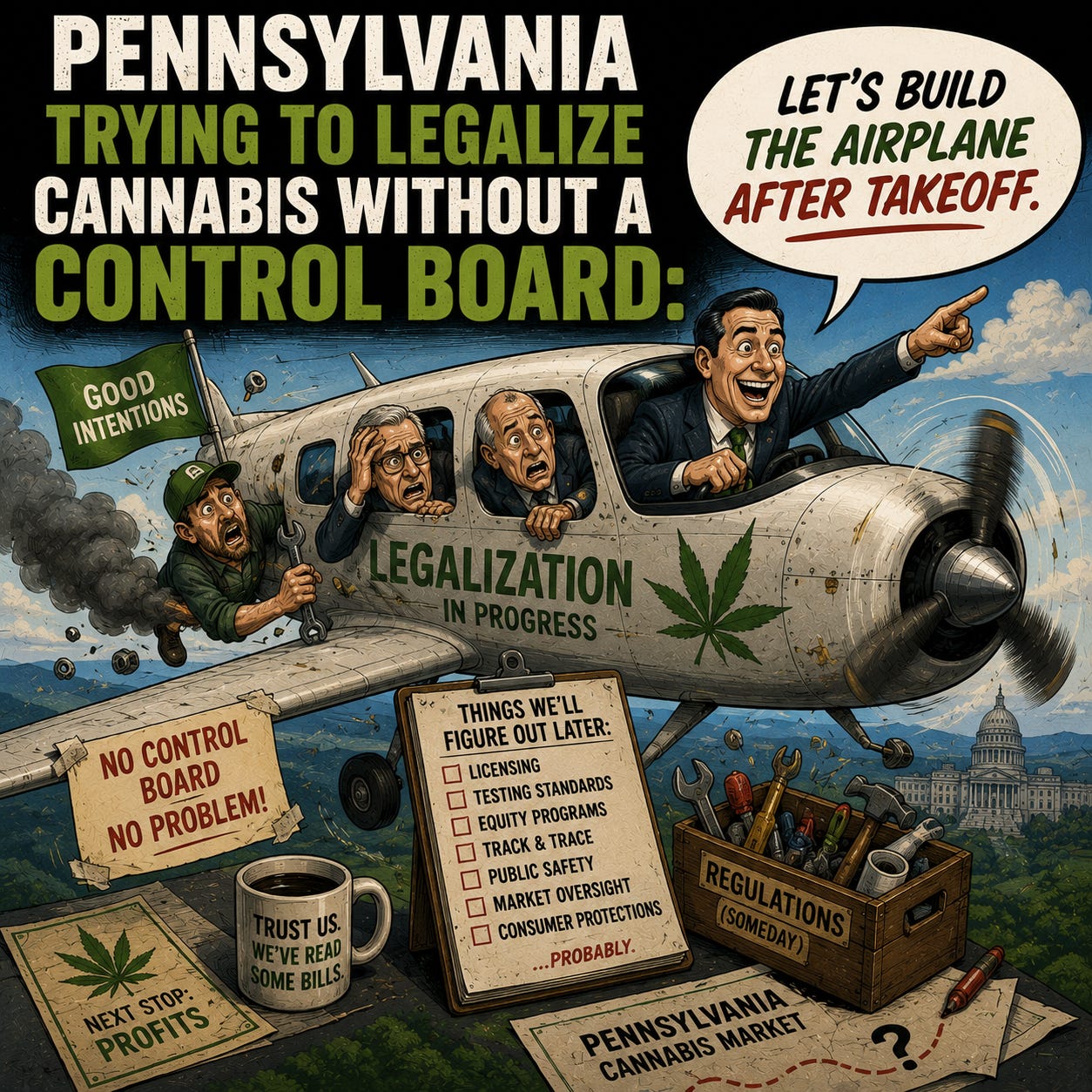
Pennsylvania lawmakers failed to advance legislation that would have created a Cannabis Control Board and broader regulatory framework.
I want to use this to make a point I keep coming back to: legalization is the easy part. Building the machine that makes a legal market actually work — regulators, licensing systems, enforcement, compliance frameworks, oversight — is the hard part, and it’s where states keep stumbling.
Pennsylvania’s failure to stand up a control board isn’t a small procedural hiccup. It’s the difference between a functioning market and a legal-on-paper-only situation. We’ve watched Virginia live in exactly that limbo for years. Pennsylvania is flirting with the same fate.
My read: the states that win the next decade of cannabis won’t be the ones that legalized first. They’ll be the ones that built the best regulatory infrastructure. First-mover advantage means nothing if your market doesn’t actually function.
Why it matters: Legalization without regulatory architecture solves almost nothing. Watch which states build the machine, not just which states pass the bill.
The hemp lawsuits are just getting started.
Hemp companies are suing Ohio over restrictions on hemp-derived cannabinoid products. Get used to headlines like this one.
The hemp market exists in a regulatory no-man’s-land where federal law, state law, and cannabis law collide constantly — and that collision increasingly gets resolved in court. Ohio is one case. There will be many more, in many more states, because there’s no coherent national framework to appeal to.
My read: until federal classification gets sorted, hemp’s future will be written by judges, one lawsuit at a time. That’s a brutal way to run an industry — expensive, slow, and wildly inconsistent across state lines. If you operate in hemp, litigation risk isn’t a tail risk anymore. It’s a core operating cost you should be budgeting for.
Why it matters: Hemp’s rules are increasingly set by courts, not legislatures. Plan for a patchwork, not a resolution.
Rescheduling is not legalization. This week was a reminder.
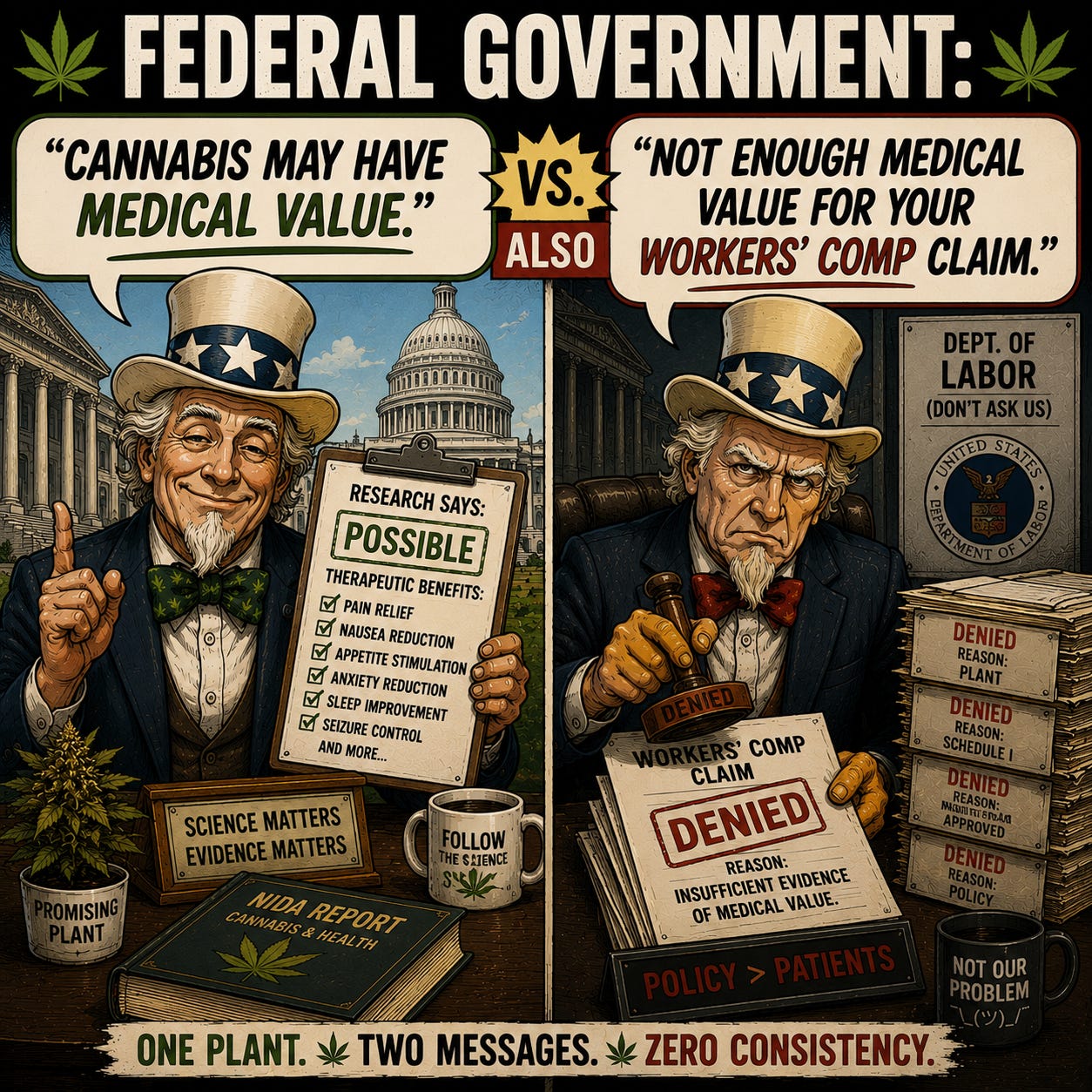
A congressional committee advanced legislation preventing federal employees from receiving workers’ compensation reimbursement for medical marijuana.
This is a useful splash of cold water. Amid all the reform momentum, it’s easy to start believing the finish line is close. It isn’t. Rescheduling moves cannabis to a less restrictive category — it does not make it federally legal, and it leaves a thicket of federal restrictions fully intact across healthcare, employment, firearms, and federal benefits.
My read: federal reform is going to come in pieces, not in one sweeping victory. Operators and advocates hoping for a single moment where everything changes are setting themselves up for disappointment. The realistic path is incremental, uneven, and frustrating — a decade of individual fights over individual restrictions.
Why it matters: Don’t mistake rescheduling for the endgame. Plenty of federal barriers survive it.
California just gave us a glimpse of the AI compliance era.
California regulators launched an AI-powered system designed to flag cannabis packaging that could appeal to children.
This sounds like a niche compliance story. I think it’s actually a preview of where all cannabis regulation is heading.
Once regulators start using AI to monitor packaging, it doesn’t stop there. Expect the same approach to spread to advertising review, licensing oversight, and enforcement prioritization. Regulators are understaffed and the industry is enormous — automation is the obvious answer, and once one state proves it works, others follow.
My read: the compliance landscape is about to get a lot more sophisticated, and a lot less forgiving. Human regulators miss things and move slowly. AI systems don’t get tired and don’t overlook the fortieth packaging violation of the day. Operators used to flying under the radar should assume the radar is getting dramatically better.
Why it matters: Your next compliance challenge might come from software, not an inspector. The margin for sloppiness is shrinking.
The research keeps quietly building the strongest case.
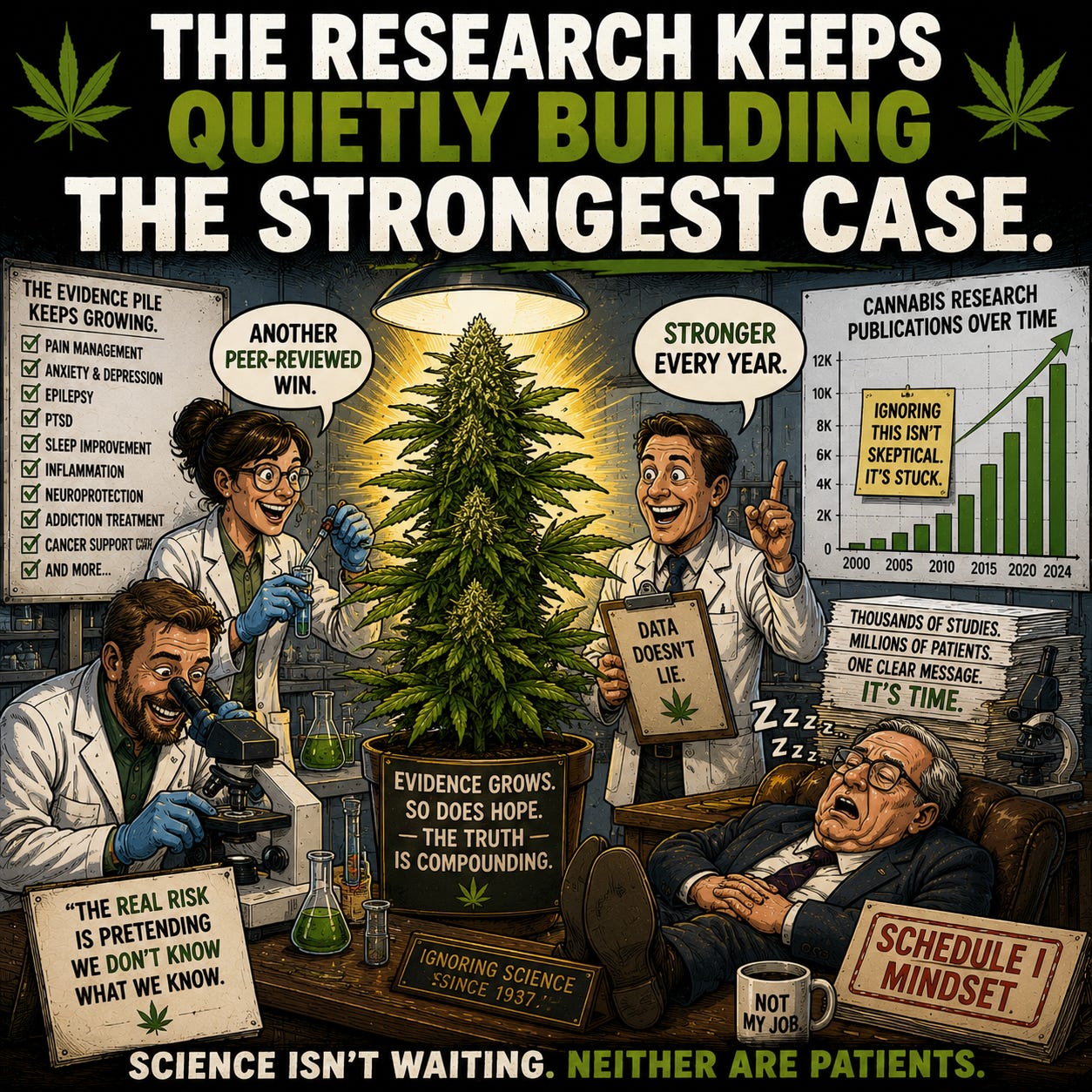
A new study found cannabis extracts improved sleep quality and reduced anxiety among cancer patients.
While everyone fixates on the political and legal drama, the research base keeps expanding in the background — and I’d argue it’s the most durable force in this entire industry.
Here’s why: politics swing, administrations change, courts rule and get overruled. But scientific evidence accumulates and doesn’t reverse. Every study like this one adds to a foundation that makes cannabis harder to dismiss and easier to integrate into mainstream medicine. It’s slow, unglamorous, and almost never the top headline. It’s also winning.
My read: science outlasts politics. The regulatory fights will rage for years, but the long-term normalization of cannabis is being driven by research that quietly piles up regardless of who’s in office.
Why it matters: Medical validation is the most durable driver of cannabis normalization — and it doesn’t care about election cycles.
Final thought
Cannabis spent decades trying to become mainstream. Now it’s finding out what mainstream actually means.
Mainstream means regulators. It means litigation. It means compliance officers and AI monitoring systems and federal oversight and turf wars over who controls implementation. It’s less romantic than the activist era, and a lot more complicated.
But this is what arrival looks like. Every major industry goes through it — the messy transition from fighting to exist to fighting over the rules. Cannabis is squarely in that phase now.
The legalization era built this industry. The governance era will decide who survives it.
The operators paying attention to courts, agencies, and regulatory architecture — not just legalization headlines — are the ones who’ll still be standing on the other side.
That’s what this newsletter is for.
What’s the biggest regulatory challenge your operation is facing right now? Hit reply — I read every response and it shapes what I cover next week.
If this was useful, forward it to someone in the cannabis space or hit the restack button on Substack. It’s how this community grows.
🌿 Hypotenews