
The System Isn’t Catching Up, It’s Splintering.

Cannabis policy in the U.S. is no longer moving in one direction—it’s moving in several at once.
Federal agencies are quietly acknowledging data that undermines decades of messaging. Courts are reinforcing old tax rules even as rescheduling looms. States are experimenting with healthcare integration, while others debate who gets to dominate new markets.
And in the background, an entirely separate—but related—movement around psychedelics is accelerating.
The result is not a clean transition from prohibition to legalization. It’s something messier: a fragmented policy environment where reform, resistance and reinvention are all happening simultaneously.
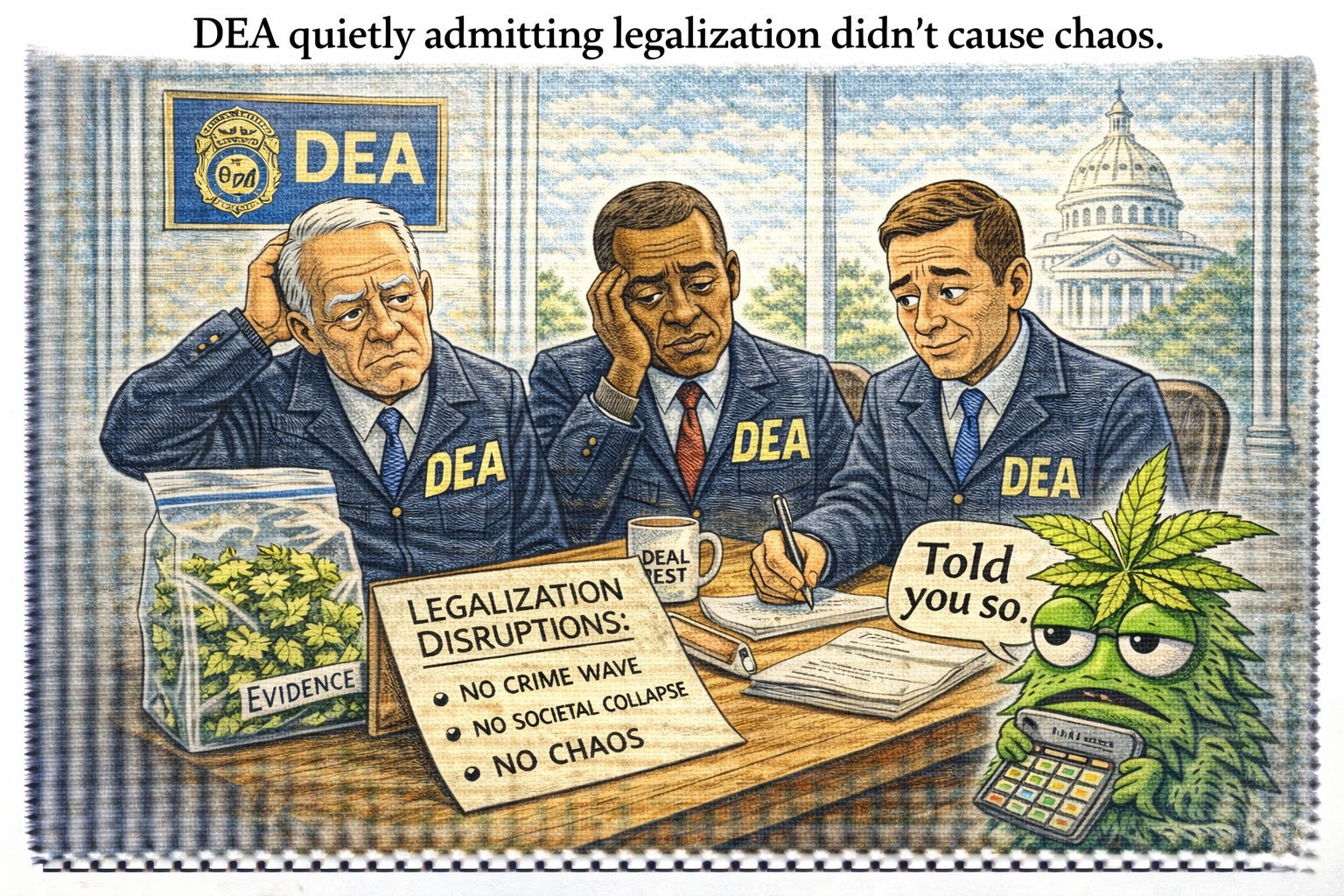
DEA Acknowledges Youth Marijuana Use Is Declining
In a subtle but significant shift, the Drug Enforcement Administration has acknowledged that youth marijuana use is declining—even as legalization expands nationwide.
The admission appears in a DEA educational resource, marking one of the clearest instances of a federal agency publicly recognizing a trend that contradicts a long-standing anti-legalization argument.
For years, opponents warned that legal cannabis would lead to increased youth consumption. But federal and state data have increasingly suggested otherwise—and now the DEA itself is reflecting that reality.
This doesn’t eliminate concerns about underage use. Public health experts still emphasize risks to developing brains. But it does change the framing of the debate.
Instead of hypothetical outcomes, policymakers are now dealing with measurable trends.
And those trends suggest legalization may not be producing the social harms many feared.
Key Takeaways
DEA materials acknowledge declining youth marijuana use.
The finding challenges a central anti-legalization claim.
Policy debates are increasingly driven by real-world data.
New Congressional Report Signals Momentum On Rescheduling
A newly highlighted congressional report is reinforcing that federal cannabis reform is no longer theoretical—it’s procedural.
The report outlines ongoing efforts to reschedule marijuana under federal law, a move that could significantly alter how cannabis is regulated, researched and taxed.
Rescheduling would not legalize cannabis federally. But it could:
Ease research restrictions
Reduce tax burdens tied to IRS code 280E
Shift enforcement priorities
Still, the report underscores a key reality: rescheduling is just one step in a much larger process.
Even if cannabis moves to a less restrictive schedule, conflicts between federal and state law will remain—especially around banking, interstate commerce and criminal justice.
Key Takeaways
Federal rescheduling discussions are actively progressing.
Reform is shifting from debate to implementation.
Additional legislation will still be required.
IRS Says Cannabis Businesses Can’t Escape 280E—Yet
The Internal Revenue Service is pushing back against a cannabis industry legal strategy aimed at avoiding one of its biggest financial burdens: Section 280E.
In a recent court filing, the IRS argued that marijuana businesses cannot force courts to assume rescheduling has already happened in order to bypass current tax restrictions.
Under 280E, cannabis companies are barred from taking standard business deductions, dramatically increasing their tax liability.
Some businesses have attempted to challenge the rule by arguing that impending rescheduling should be considered in court decisions.
The IRS response is clear: not yet.
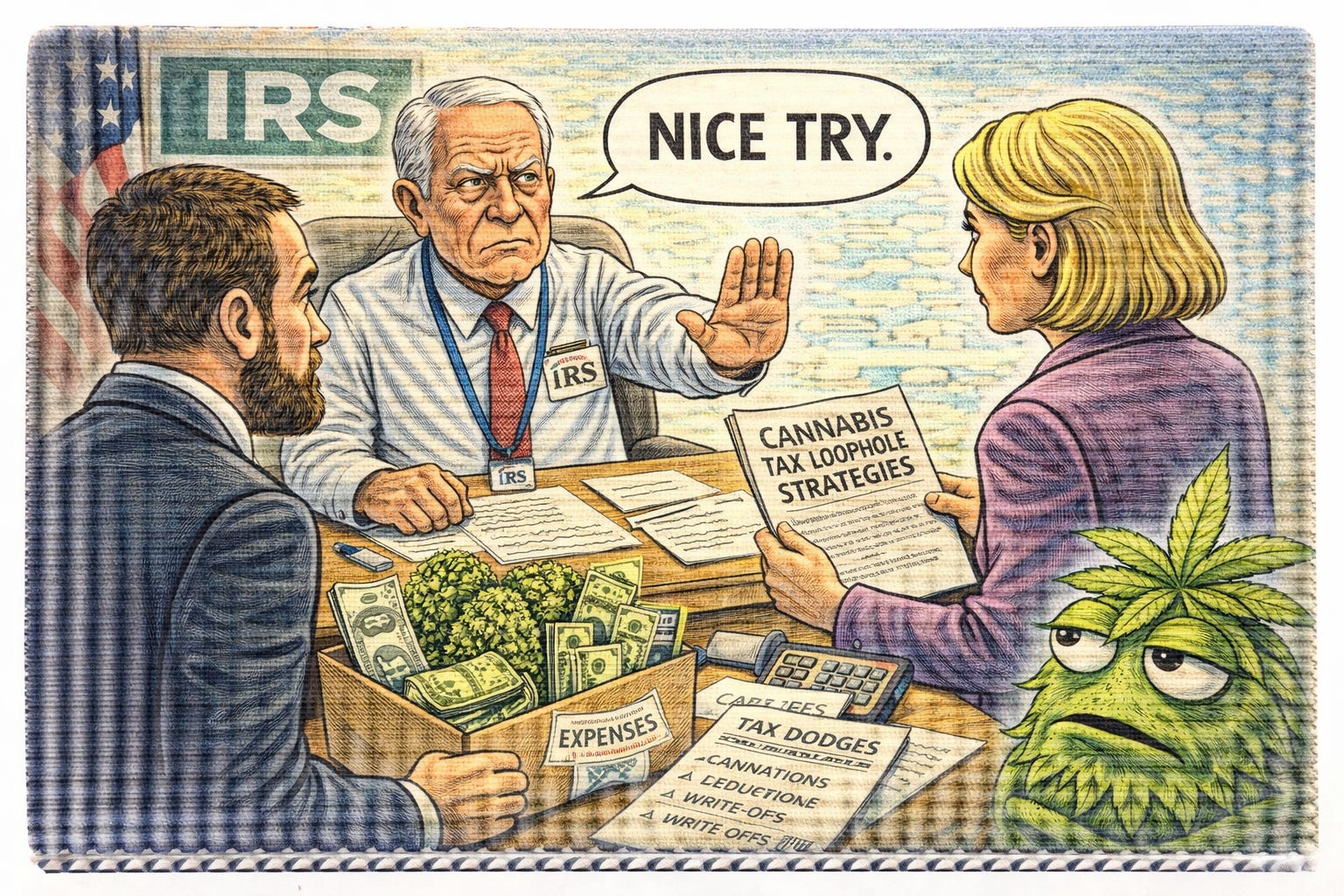
Until federal law officially changes, cannabis businesses must continue operating under existing tax rules.
This highlights a growing tension—policy reform may be coming, but the current system is still very much in place.
Key Takeaways
IRS is defending current cannabis tax restrictions.
Businesses cannot preemptively benefit from rescheduling.
Legal and financial uncertainty remains high.
Hawaii Advances Medical Cannabis Access In Healthcare Facilities
Hawaii’s Senate has approved a bill allowing certain patients to use medical cannabis within healthcare facilities.
For years, hospitals and care centers have often prohibited cannabis use—even for patients legally authorized to consume it.
The new legislation would allow seriously ill patients to maintain access to medical marijuana during treatment.
This is part of a broader national shift toward integrating cannabis into mainstream healthcare systems.
As medical marijuana programs mature, policymakers are increasingly addressing gaps between legality and real-world access.
Key Takeaways
Hawaii is moving to allow medical cannabis use in healthcare settings.
Patients would retain access during treatment.
Healthcare integration is a growing policy focus.
Virginia Cannabis Market Plan Faces Equity Criticism
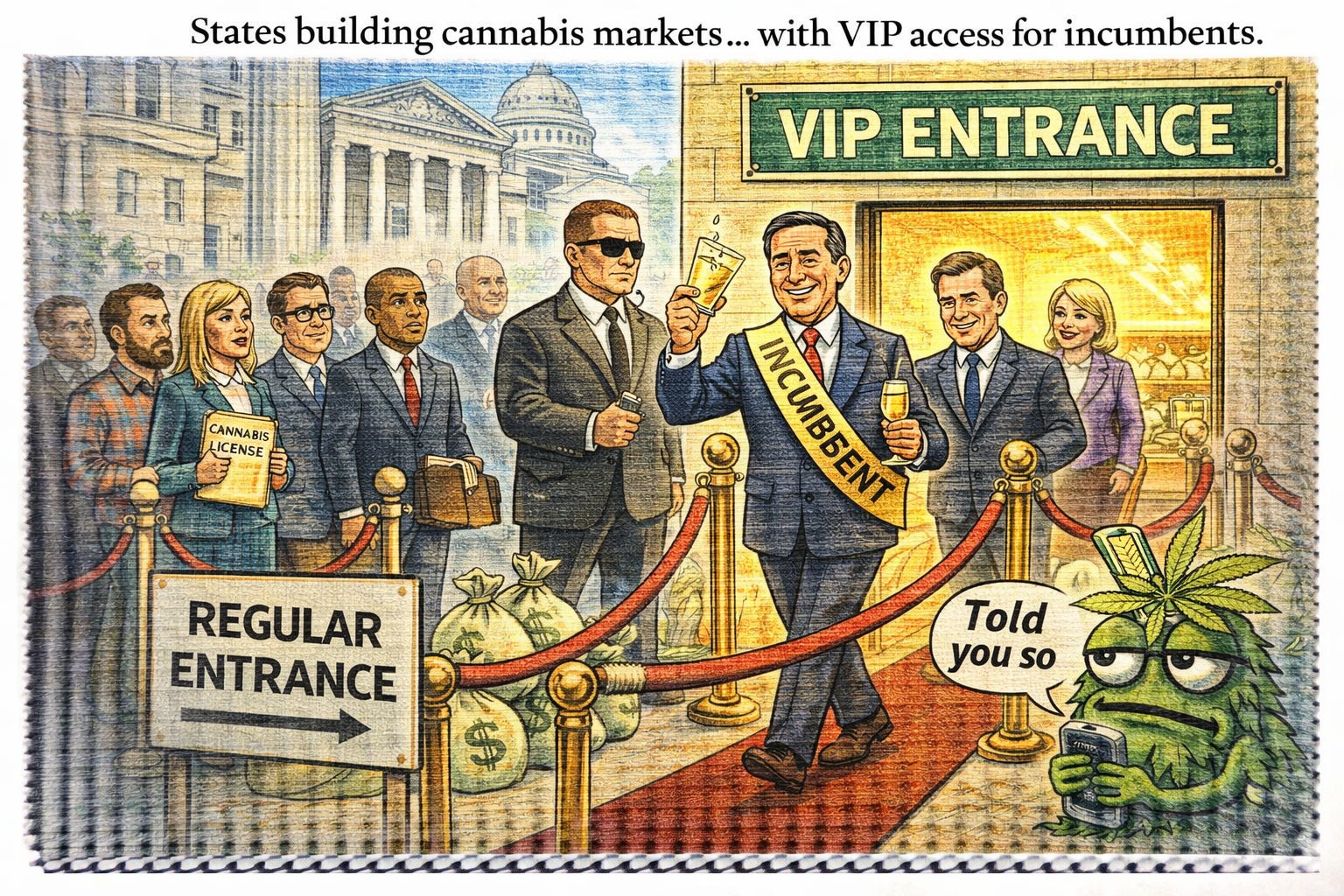
Virginia’s plan to launch adult-use cannabis sales is facing criticism over market fairness.
An analysis argues that the framework gives existing large operators a significant early advantage, allowing them to begin sales before new entrants can fully participate.
This raises familiar questions:
Who benefits first from legalization?
How competitive will new markets actually be?
Can equity goals survive real-world implementation?
Virginia’s approach could become a case study in how states balance speed with fairness.
Key Takeaways
Existing businesses may dominate early market phases.
Equity concerns remain central to legalization debates.
Market structure decisions have long-term consequences.
Federal Warning Highlights Drug Testing Risks From Hemp And Cannabis
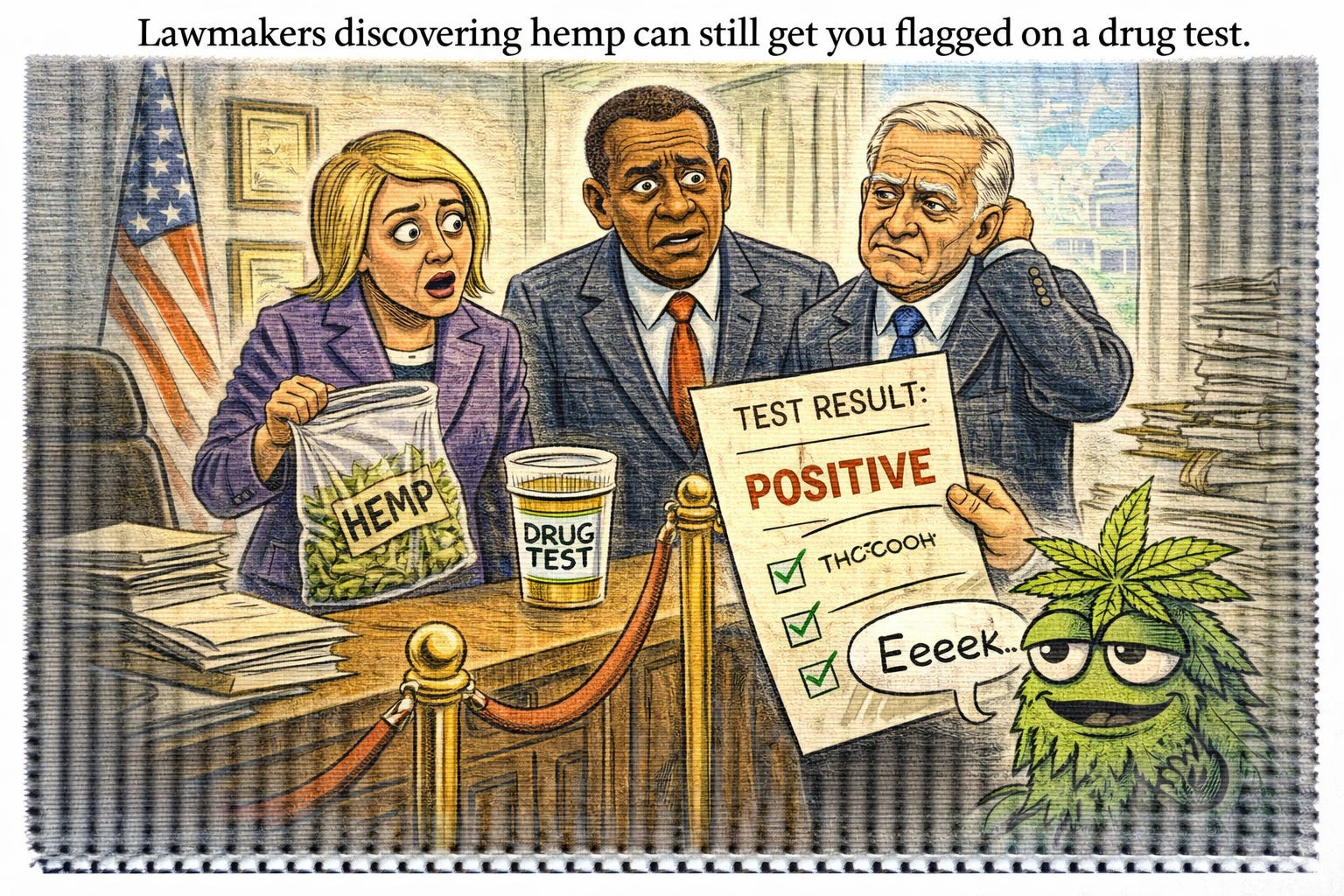
Federal officials are warning that both cannabis and hemp products can trigger positive drug test results—an issue that continues to create confusion for consumers.
Even products marketed as low-THC or non-intoxicating may still contain enough cannabinoids to register on standard drug screenings.
This is particularly relevant as hemp-derived products proliferate across the country.
Consumers often assume legality equals safety from testing consequences—but that’s not always the case.
Key Takeaways
Hemp and cannabis products can trigger drug test positives.
Consumer confusion remains widespread.
Regulatory clarity has not kept pace with product growth.
Florida Legalization Campaign Blocked From 2026 Ballot
Efforts to place a marijuana legalization measure on Florida’s 2026 ballot have been halted.
The campaign failed to overcome legal and procedural challenges related to signature validation, effectively ending the current push.
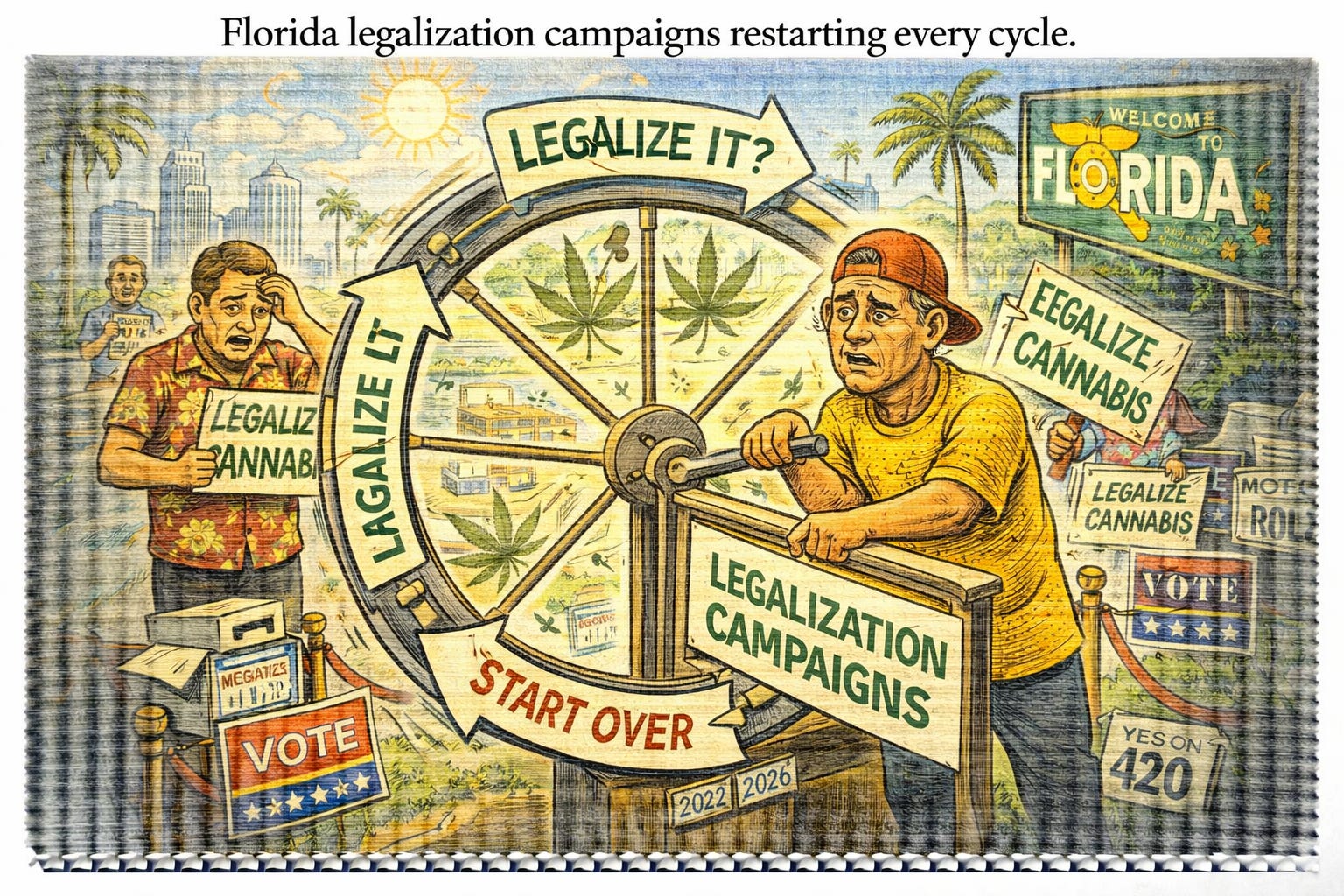
Florida remains one of the most closely watched states for legalization, given its size and political influence.
But this setback shows how difficult ballot initiatives can be—even with strong public support.
Key Takeaways
Florida legalization effort has been blocked for 2026.
Legal challenges derailed the campaign.
Future efforts are likely but uncertain.
GOP Congressman’s Past Cannabis Activity Sparks Debate
A Republican congressman’s acknowledgment of past cannabis sales is drawing attention to the contradictions in drug policy.
The admission comes as the lawmaker opposes broader legalization and reform efforts—highlighting a recurring theme in cannabis politics.
Critics argue the situation reflects longstanding inconsistencies in enforcement and rhetoric.
Supporters frame it as evidence of evolving perspectives.
Either way, it underscores how personal history and public policy often collide in this space.
Key Takeaways
A GOP lawmaker admitted past marijuana sales.
The revelation sparked debate about policy consistency.
Cannabis politics remain deeply complex.
Reform Is Real, But So Is Resistance
The cannabis movement has clearly passed the tipping point—but it hasn’t reached stability.
Instead, the system is in transition:
Federal agencies are adjusting—but cautiously
States are innovating—but unevenly
Markets are expanding—but imperfectly
What emerges next won’t be a single, unified policy—it will be a patchwork system shaped by competing priorities.
And that may be the defining feature of cannabis reform’s next chapter.