

Here’s a sentence you don’t hear often enough in cannabis coverage:
Progress and regression are happening simultaneously.
This week, the WNBA removed cannabis from its banned substances list — a genuine cultural milestone. At the same moment, congressional amendments designed to protect hemp-derived THC products were blocked, a lawsuit was filed against federal rescheduling, and Virginia’s governor vetoed a bill that would have finally opened retail sales in a state where cannabis is already technically legal.
That’s the cannabis industry in 2026. Two steps forward, one step sideways, one step into a courtroom.
The operators who thrive in this environment won’t be the ones waiting for clarity to arrive. They’ll be the ones building their businesses to function without it.
Here’s what happened this week — and what I actually think it means.
The WNBA just made a bigger statement than most politicians have.
The WNBA officially removed cannabis from its banned substances list this week, while simultaneously establishing guidelines for player endorsements with cannabis companies.
Let’s be clear about what this actually is: a major professional sports league looked at cannabis and decided it belongs in the same category as alcohol and caffeine, not steroids and amphetamines. That’s not a small thing.
Professional sports leagues have historically been among the last institutions to update their cannabis policies — for obvious reasons, sponsors, federal relationships, image concerns. The fact that the WNBA moved here, and moved decisively, reflects something real about where mainstream America has landed on this issue.
The endorsement piece may end up mattering even more than the policy change. Athletes carry consumer trust in a way that brands spend millions trying to manufacture. Cannabis companies that build authentic relationships with WNBA players now are making a long-term bet that will look smart in five years.
My read: the NBA and NFL are watching this closely. One of them moves within two years — my money is on the NBA.
The bottom line: When professional sports leagues start treating cannabis like a normal consumer product, the cultural argument is over. We’re there.
Hemp’s worst week in years — and it’s not over.
Congressional amendments designed to protect hemp-derived THC products — Delta-8, THCA flower, hemp beverages, alternative cannabinoids — were blocked from advancing this week.
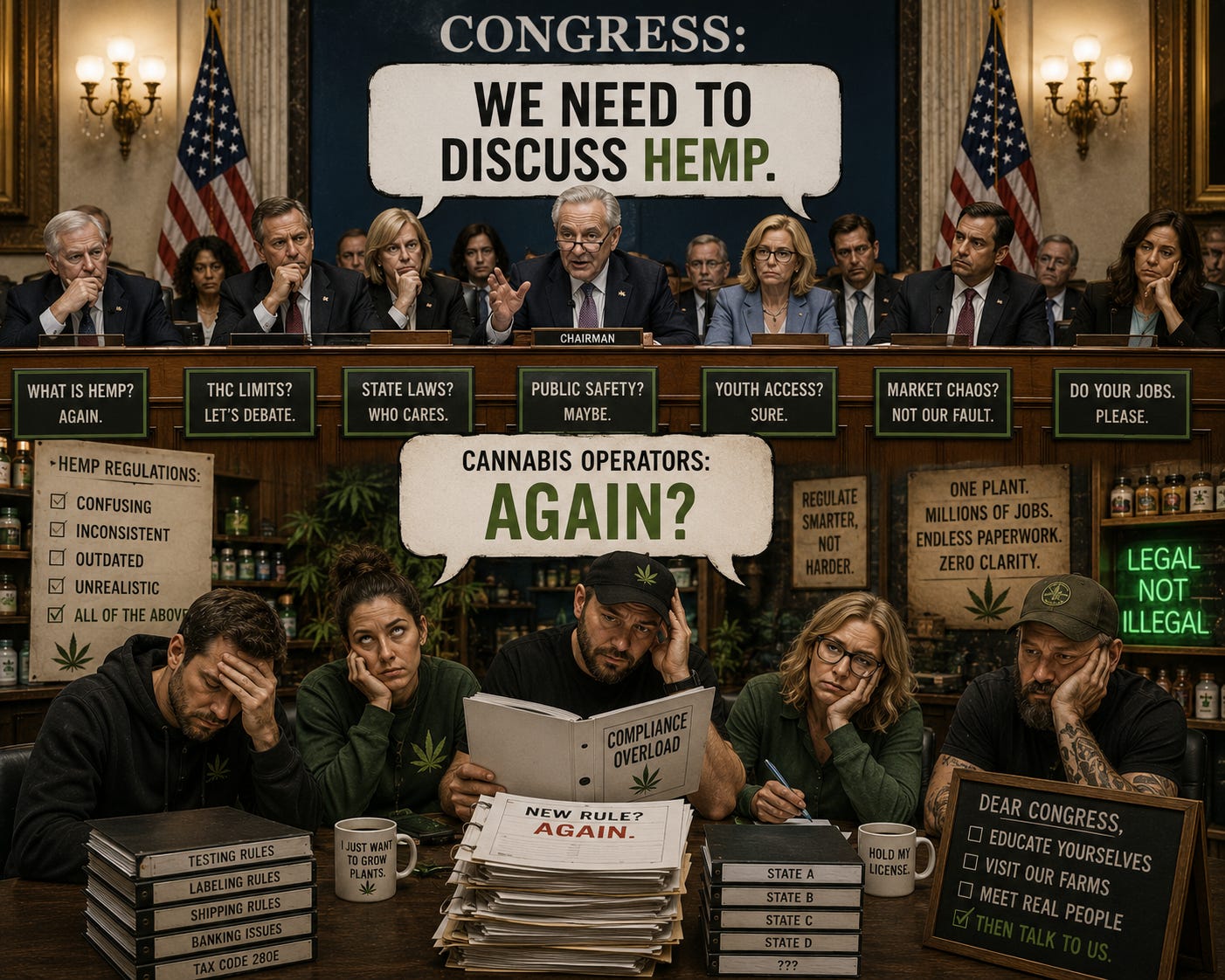
I want to be direct about how serious this is. The hemp-derived cannabinoid market has grown into a multi-billion dollar industry operating in a regulatory gray zone that Congress created, largely by accident, with the 2018 Farm Bill. That gray zone is closing.
The arguments on both sides are real. Hemp operators argue they’re driving innovation and expanding consumer access to cannabinoids that help people. Licensed cannabis operators argue they’re competing against businesses that don’t pay their taxes, don’t carry their licensing costs, and don’t play by the same compliance rules. Both are telling the truth.
But here’s what I think actually happens: Congress will pass something restrictive, it will be written poorly, it will disproportionately hurt smaller operators who can’t afford the legal firepower to navigate new requirements, and the big players on both sides will be fine. That’s how these things tend to go.
If you’re in the hemp space and you’ve been hoping this problem goes away on its own — it won’t. The window to build your compliance infrastructure before the rules land is shorter than you think.
The bottom line: The hemp THC fight may be the single most consequential cannabis policy battle of 2026. Treat it that way.
Virginia is still Virginia.
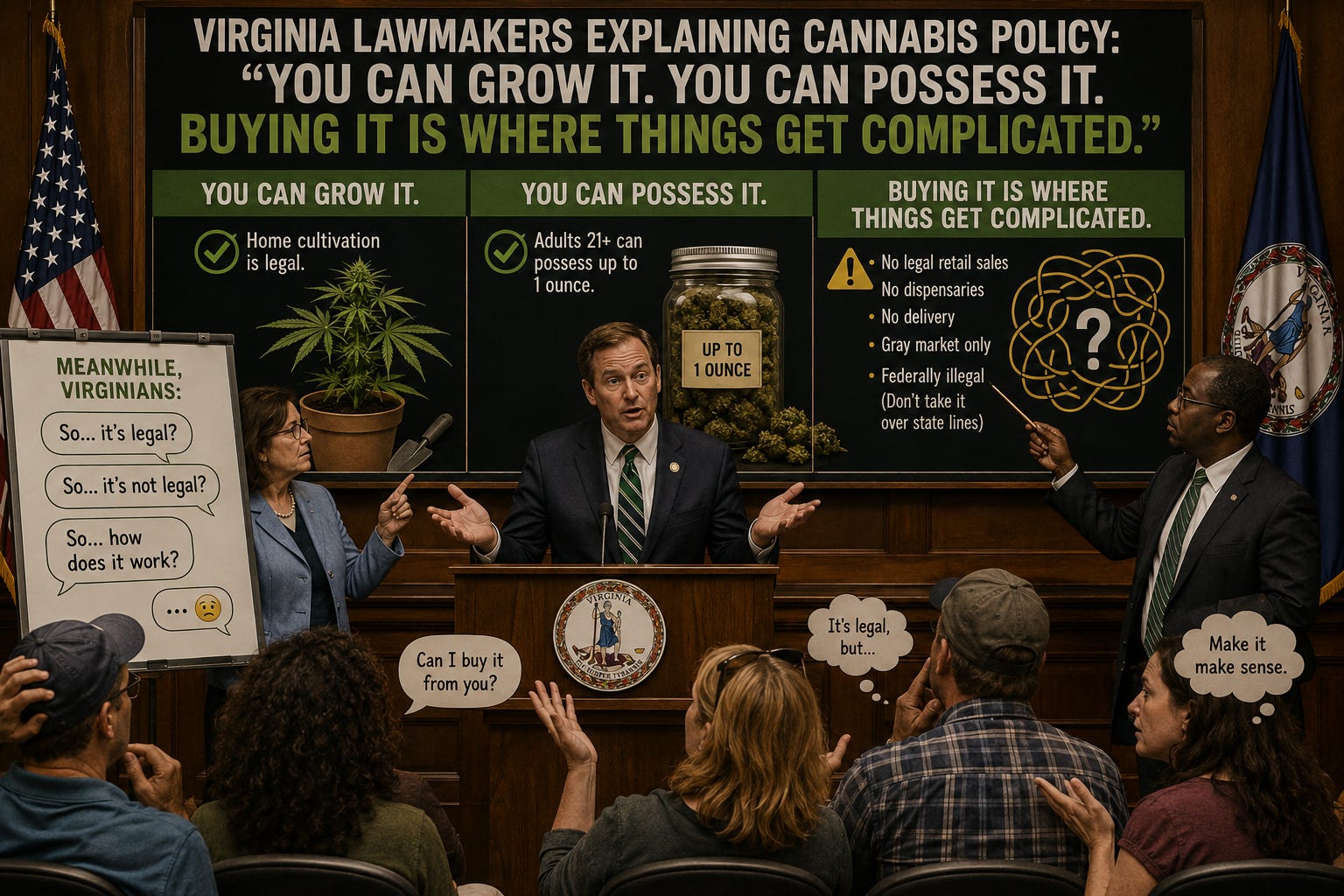
After Governor Abigail Spanberger vetoed legislation to legalize adult-use retail sales, Virginia lawmakers are now exploring whether they can attach legalization provisions to budget legislation to get around the veto.
I’ve written about Virginia before and my view hasn’t changed: this state is the clearest possible example of the gap between legalizing cannabis and building a cannabis market. Residents can possess it. They can grow it at home. They just can’t buy it from a regulated retailer. That’s not a cannabis policy — it’s a contradiction.
The budget legislation route is creative, and it might work. But it’s also a sign of how politically complicated this has become. When you’re trying to pass cannabis legalization through budget amendments, you’ve moved well past simple policy disagreement into something messier.
The deeper issue is that every state watching Virginia is learning the same lesson: the political coalition that passes legalization is not always the same coalition that builds a functional market. Those are two different fights, requiring two different strategies.
The bottom line: Virginia will get there. But the timeline keeps moving, and the lesson for other states is getting clearer: plan your implementation before you pass your bill, not after.

Someone sued Trump over rescheduling. Here’s why it matters.
A coalition of physicians, substance abuse professionals, and cannabis pharmaceutical interests filed a lawsuit this week challenging federal marijuana rescheduling efforts.
The political coalition behind this lawsuit is worth paying attention to. It’s not prohibitionists arguing cannabis is dangerous. It’s a mix of medical professionals with genuine concerns about the research process and pharmaceutical interests who have financial stakes in keeping cannabis in a regulatory category they can control. Those are very different motivations dressed up in the same lawsuit.
What this tells me is that the opponents of reform have largely abandoned the public opinion battlefield — they’ve lost it — and are now fighting on administrative and legal terrain. That’s a slower game, but it can be effective. Federal administrative law is complicated, courts move slowly, and a successful legal challenge could delay rescheduling by years.
Operators should not assume rescheduling is a done deal. I’m not saying it fails — I think it eventually succeeds — but the path runs through federal courts now, not just agency rulemaking, and that adds meaningful uncertainty to the timeline.
The bottom line: The next major cannabis battles will be won and lost inside courtrooms. If you don’t have someone on your team who understands federal administrative law, you have a gap.
Wisconsin is the next big domino — and candidates know it.
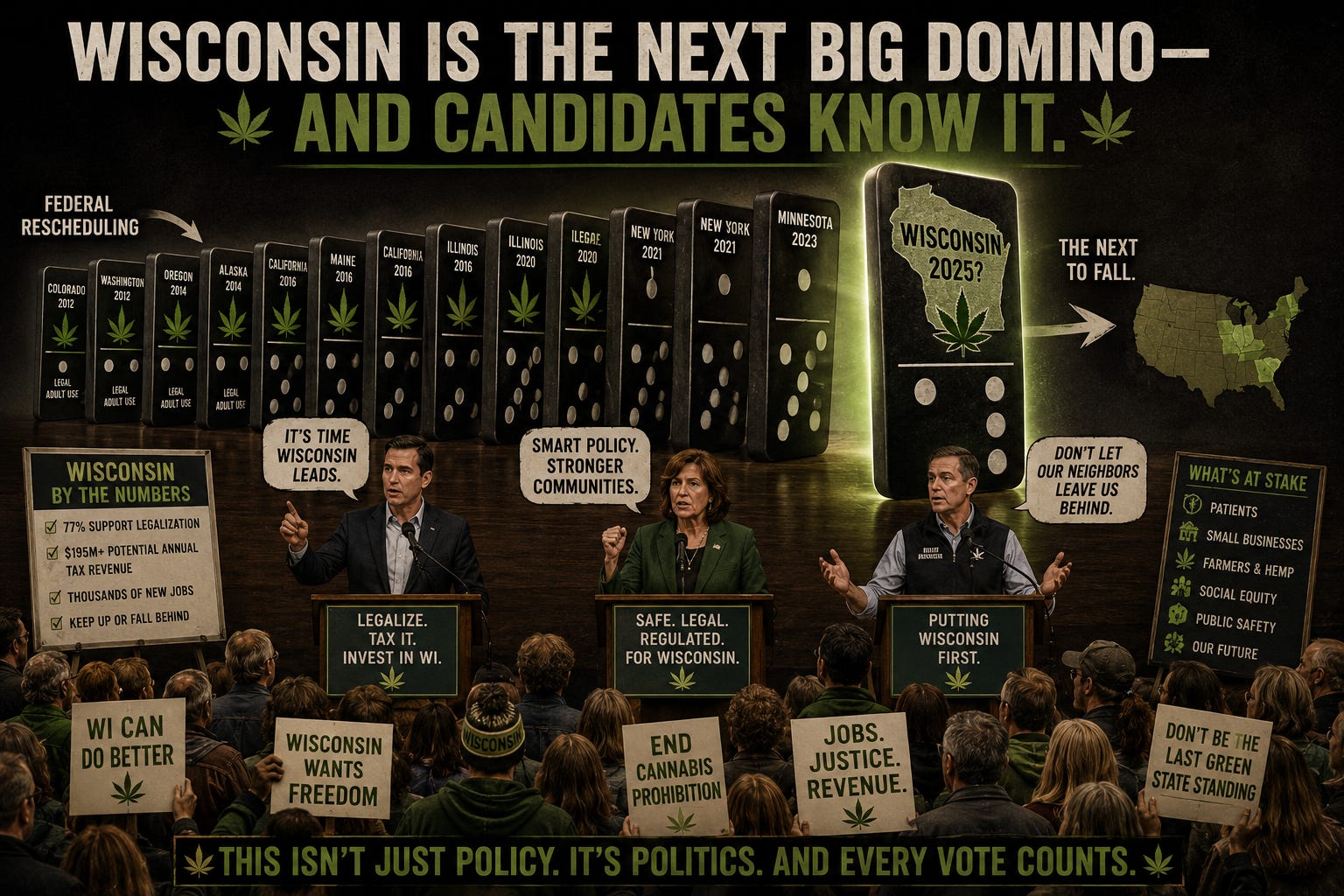
Democratic gubernatorial candidates in Wisconsin pledged this week to support cannabis legalization, hemp protections, and additional executive actions if elected.
Wisconsin is one of the largest remaining states without adult-use legalization, and it sits surrounded by states that have moved. Illinois is generating over a billion dollars a year in cannabis tax revenue directly across the border. That’s not an abstract policy argument — that’s money Wisconsin is watching leave.
The political dynamics are shifting. When Republican-leaning rural voters start connecting cannabis legalization to farm income (hemp) and tax revenue (adult-use), the partisan math changes. Wisconsin is closer to moving than the headlines suggest.
My read: Wisconsin legalizes within three years, driven less by progressive politics and more by economic pragmatism.
The bottom line: Non-legalized states with legalized neighbors are running out of reasons to wait. Watch Wisconsin closely.
California just complicated tribal cannabis — again.
California Attorney General Rob Bonta issued an opinion this week stating that tribes seeking to participate in statewide cannabis commerce must obtain state licenses — they cannot operate under tribal sovereignty alone.
This one is genuinely complicated, and I want to resist the urge to oversimplify it.
Tribal sovereignty is a serious legal principle with deep roots in federal law. The argument that tribes should be able to operate cannabis businesses outside state licensing frameworks isn’t frivolous — it’s grounded in legitimate legal theory. At the same time, California built its cannabis regulatory system on the premise that everyone operating in the state market plays by the same rules. Both of those things can be true simultaneously.
What this ruling really signals is that cannabis is now complex enough that it’s surfacing legal tensions that have existed for decades in other industries. The intersection of tribal law, federal law, and state cannabis regulation is going to generate litigation for years.
The bottom line: Jurisdictional and licensing complexity is only increasing. If your business touches multiple regulatory frameworks, you need counsel who understands all of them.
Republicans are fighting for hemp. That’s not a headline from five years ago.
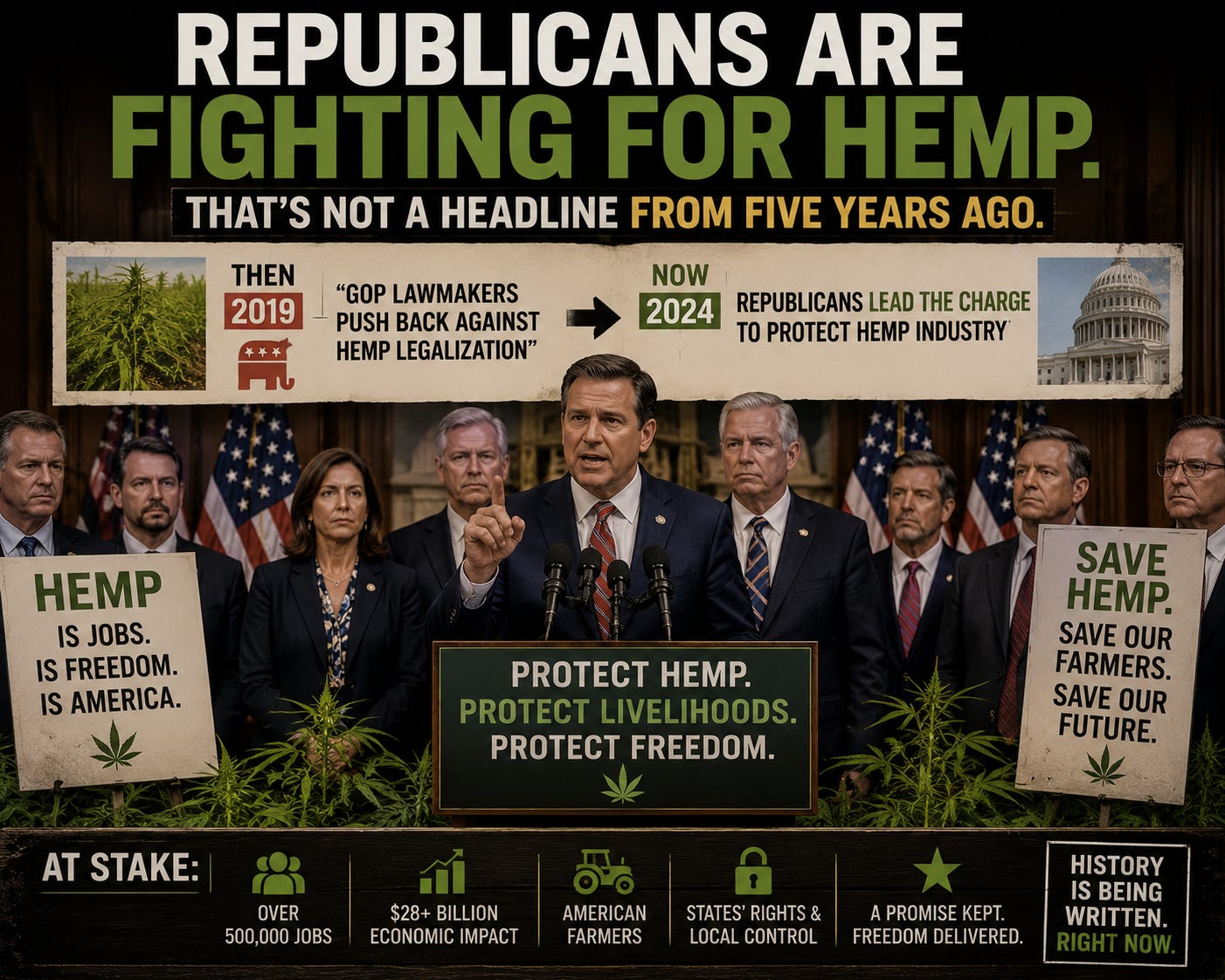
Even after this week’s setbacks, Republican lawmakers are continuing to push for federal protections for the hemp-derived cannabinoid industry.
The political significance here shouldn’t be underestimated. Cannabis reform used to be a Democratic issue. Hemp protection is increasingly a Republican one — driven by agricultural districts, small business interests, and economic development concerns in rural states. That’s a genuine realignment.
When Republican legislators from conservative states are fighting to protect hemp THC products, the “cannabis is a liberal issue” framing is finished. This is now an economic issue with a broad bipartisan constituency, which means it will eventually get addressed by Congress — the question is just whether the result helps or hurts current operators.
The bottom line: The bipartisan coalition forming around hemp is the most underreported political development in cannabis right now. Pay attention to it.